
Theme: Science, educational, inciteful.
Reading Time: 5 minutes.
Please subscribe to receive my latest posts about nature & science straight to your email inbox. 🌏👩🏽🔬😀
Throughout my blog, I plan to write informative articles about our Earth, its environments and systems, and what we can do to enjoy them and protect them. However, anything I write will fall on deaf ears if a basic understanding of science is not obtained by my readers.
What is science? And how does it work?
Science, or Scientia in Latin, means knowledge.
Put simply, that’s what science is all about. Building a network of knowledge.
For a more specific definition of the word as it’s used today, a quick google search would result in a definition such as this:
“The intellectual and practical activity encompassing the systematic study of the structure and behaviour of the physical and natural world through observation and experiment” (Definition: Oxford Languages).
Now, the key to that definition lies within the words “systematic study”.
Science works because it relies on its age-old, refined method of systematic study, or as you may have heard it referred to as, the scientific method.
This method is what makes science a robust tool for understanding everything there is to know. Or at least, everything there is to know about that which can be tested.

What is the scientific method?
The scientific method is more or less a problem-solving approach. It relies on a series of steps that need to be addressed and by doing so we can come to a robust conclusion on the issue at hand.
The scientific method is simple by nature and incorporates these 7 steps:
Step 1. Make an observation.
Example: My plants die during long, dry periods.
Step 2. Ask a question.
Example: Why do my plants die during long, dry periods?
Step 3. Form a hypothesis.
Example: My plants require regular watering to live!
Step 4. Make a prediction based on the hypothesis.
Example: If I do not regularly water my plants they will die.
Step 5. Test this prediction.
Example: Set up an experiment exposing my different plants to different treatments of water including no water and then various amounts of water at regular temporal intervals and collect data that can be used to determine the health of the plants, including whether they survive or die.
Step 6. Analyse findings and draw conclusions.
Example: An experiment of this nature would likely reveal that plants don’t simply die from no water, they also die from too much water, and different plants require varying amounts at different temporal intervals to maintain their health and survive.
However, as simple as the above steps are, and although they fit just about any scenario, simply carrying them out does not fulfil the scientific method. The most important step is still to come.
What’s the most important step of the scientific method?
The above steps and example scenarios may be enough for the person or scientist carrying them out to say.
“It is likely that the amount of water and the frequency of watering affects a plant’s health”.
But a good experiment and a scientist who has reported unbiasedly on their results should also state.
“However, the degree to which water affects any plant’s health depends on the species of plant in question and other variables such as climate, weather, and soil type/nutrients are likely to play a role”.
As you can see the above statements offer no real, strong conclusion.
That’s because the most important steps of the scientific method are:
Repetition and follow on research.
Any robust scientific conclusion can only be drawn after repeat testing and scrutiny has taken place.
If a hypothesis is initially disproven, that hypothesis will be rejected. Importantly, even rejected hypotheses are then subject to ongoing scrutiny and testing and this ensures no hypothesis is widely accepted as rejected until a significant amount of evidence amounts to do so.
Basically, one stand-alone experiment or a couple of experiments, are not enough.
Once a hypothesis has been tested time and time again and has stood up against all scrutiny and testing while accumulating a significant amount of evidence to support it, then and only then will it be accepted by the scientific community as being a strongly supported hypothesis.
Strongly supported hypotheses, that have stood the test of time and continue to do so while providing a foundation for understanding, will likely go on to become scientific theory.
Importantly, rejected or supported hypotheses will always pave the way for follow on research. For instance, in our example study above, the results have paved the way for further research investigating more species-specific outcomes and controlling variables such as climate, weather, and soil type/nutrient availability.
All studies will close a door (while leaving it ajar) and in the same turn open a new one for further investigation.
It is commonly accepted within the scientific community that had it not been for the vast amounts of research compiled before ours, we would not be able to draw the conclusions we have come to today.
“If I have seen further it is by standing on the shoulders of giants” – Isaac Newton, 1675.
The above statement is now often used to symbolise scientific progress.
What’s the difference between a theory and a scientific theory?
The term “theory” when used in common language refers to:
“An idea used to account for a situation or justify a course of action” (Definition: Oxford Languages).
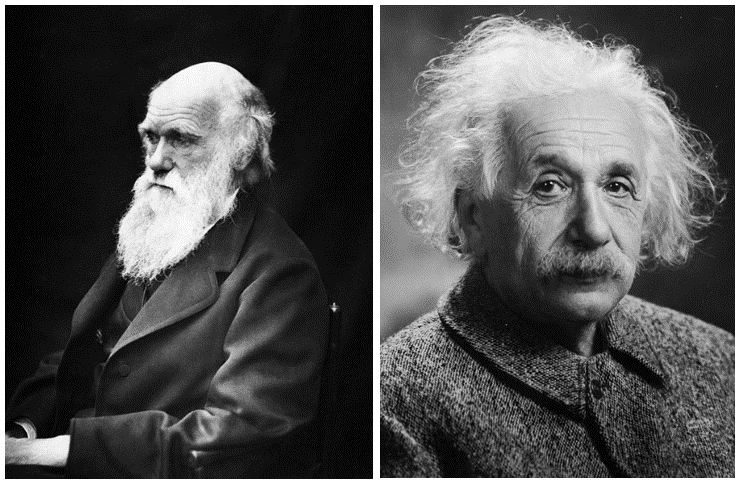
For example, if I were at school and I were to say that I was stressed out, a suitable theory offered by my peer, or a teacher may be that I have had a large workload and was simply struggling to keep up with it. Charles Darwin had a theory on the origin of species being by means of natural selection.
Now stand alone, these are both just theories and theories alone.
The difference between a theory and a scientific theory relies on the scientific method.
Charles Darwin had accumulated a strong amount of evidence from across the globe to support his theory of evolution. That theory has also been tested using the scientific method since 1859 (over 150 years) and has survived so much scepticism, scrutiny and testing to which it has never been disproved only supported. Therefore, it is now widely accepted within the scientific community as scientific theory.
I like to think of the term “scientific theory” as meaning the most likely explanation after significant amounts of scrutiny and testing, and therefore the closest explanation we have to the actual fact.

In summary.
Importantly, science, or the scientific method, is the best tool we currently have to understand our world, the universe, and the underlying processes.
As scientists and educated people, we must acknowledge that science does not and cannot prove things to be factual. It does however allow us to test things and exclude unlikely explanations through the processes of elimination and we can then strengthen conclusions by subjecting them to repeat, ongoing scrutiny. So, although we cannot prove “facts”, we can identify the best possible or likely explanation we have based on the tools, technology, and knowledge we have at the time of testing. This means that scientists themselves or at least the scientists with a good understanding of the scientific method will never refer to scientific fact; it is a fundamental driver of science that facts are impossible to prove.
A scientific theory is indeed the closest thing we have to a “fact” without being one. Examples such as Albert Einstein’s general theory of relativity, or Charles Darwin’s theory of evolution, are considered scientific theories as they are heavily supported by a large weight of evidence and, using the scientific method, all other possible explanations (hypotheses) that could be tested have been rejected. Quite simply, they have stood the test of time. Importantly, scientific theories provide us with the foundations we need to understand the world and its processes.
Lastly, science has been developing and utilised by us humans for more than 3,000 years now. To date, it is the best tool we have to make informed decisions that allow us to draw conclusions about our Earth, the universe, and its fundamental processes.
If you find a better way, I’m sure the world would love to hear it.
Thoughts? Comments? Post them below and I will be sure to respond.
Thank you and enjoy,
W. A. Greenly.
W. A. Greenly’s upcoming articles include:
- The Mystery of the Australian Megafauna.
- Recycling Made Simple.
- The Climate Change Vortex.

 W. A. Greenly.