australia, climate change, Coral, Critter Quest Earth - Videos, environment, Environmental Lessons, Marine, science, Uncategorized

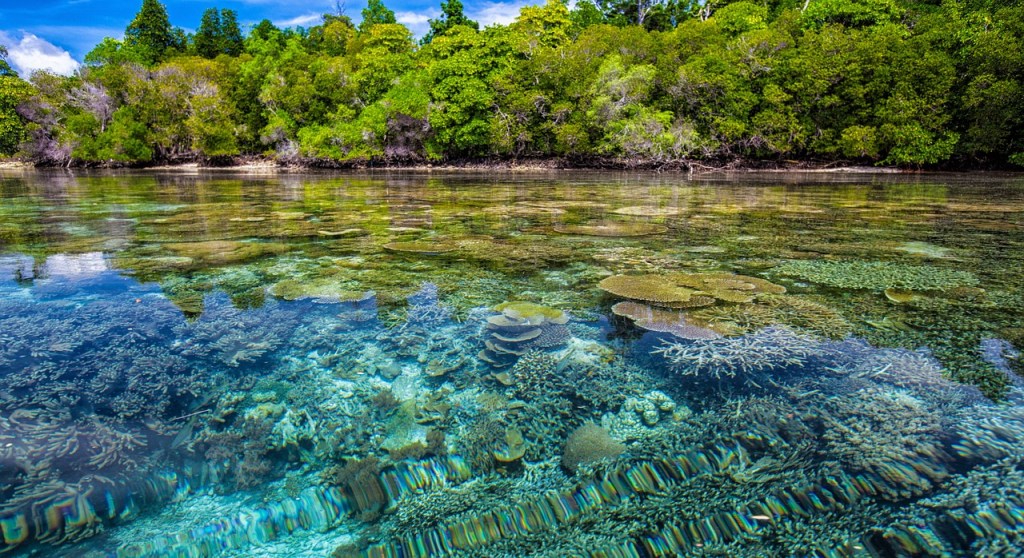
Kingdom of Corals: A Magical Journey Through the Ocean’s Tropical Reefs

Coral reefs are dying — but most people don’t even know what coral is.
That’s not your fault. Between the headlines, the heatwaves, and the heartache, it’s easy to feel overwhelmed or switch off entirely. But what if understanding these underwater cities could actually reconnect us — to nature, to awe, and to hope?

If you’ve ever marvelled at a reef from above, watched a David Attenborough doco on loop, or just want science made simple and wonder-filled — you’re in the right place.

Please, subscribe now and dive into a calmer, clearer climate conversation. No guilt trips. Just great stories, beautiful science, and practical ways to care.

If you don’t swim but adore marine life, allow me to be your guide to the vibrant world of coral reefs. Whether you paddle in rock pools or prefer to stay high and dry with a cuppa and a good David Attenborough doco, one thing’s for sure — the Kingdom of Corals is a realm like no other. Today, we’re diving into the underwater cities that never sleep. Strap in, because this isn’t just another fish tale — it’s a technicolour plunge into one of Earth’s most astonishing ecosystems.

What Is Coral, really? (Spoiler: It’s Alive!)

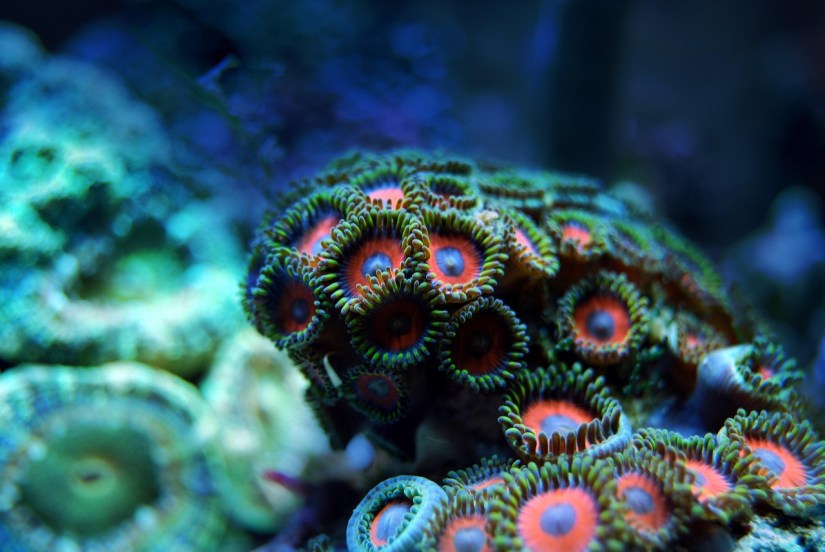
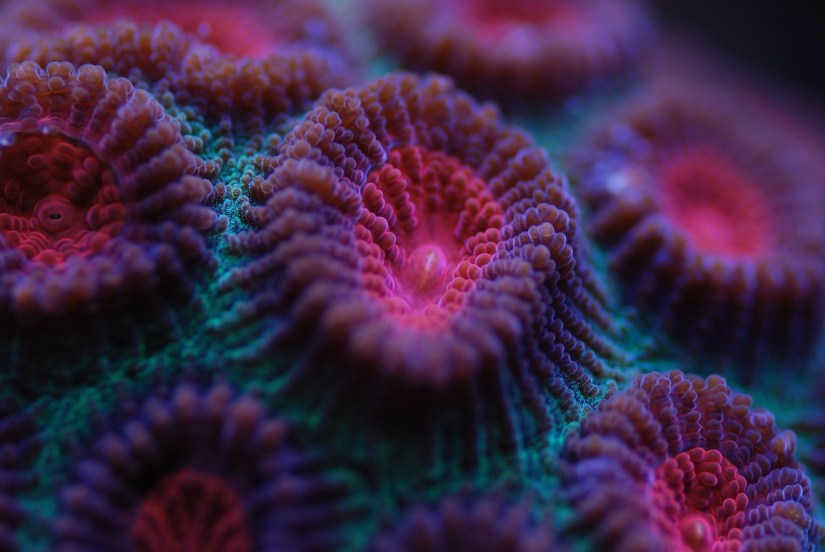
Coral might look like colourful rock candy glued to the seafloor, but surprise! It’s made of thousands of tiny animals called polyps. These little critters — no bigger than a grain of rice — are part jellyfish, part master mason.

Each polyp builds its own limestone cup (kind of like a snail with a love of architecture). Together, they form vast colonies that grow into coral reefs — the giant, bustling marine metropolises of the ocean.

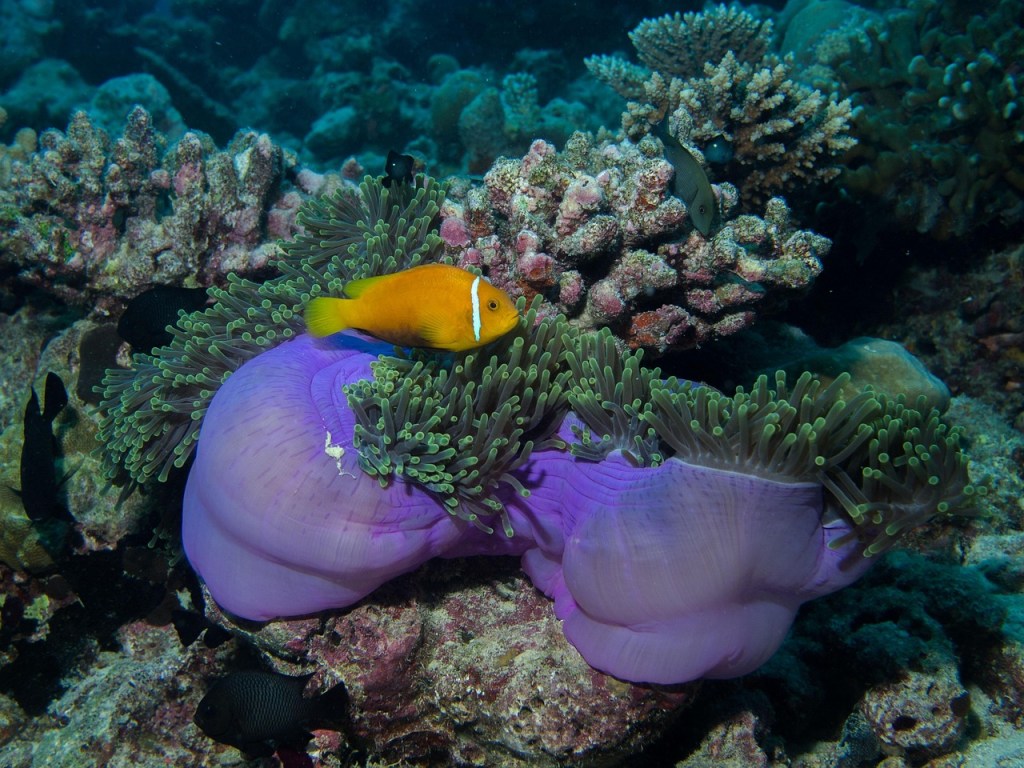
Even more amazing? Coral polyps have a secret roommate: a type of algae called zooxanthellae. These microscopic plant-like buddies live inside the coral’s tissues, providing food through photosynthesis. It’s a perfect flatmate situation — the algae get a safe home, and the coral gets fed. In Ecology, this is called symbiosis, it’s a Win-win!

Well… Until the water heats up — but more on that in a tick.

Coral Reefs: The Cities That Never Sleep

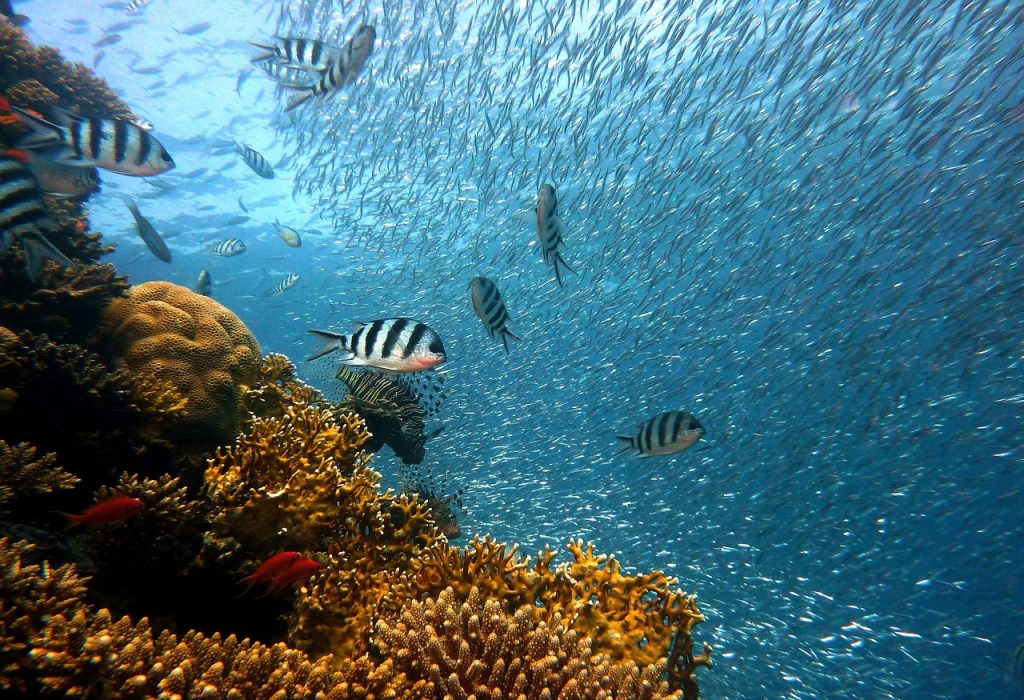
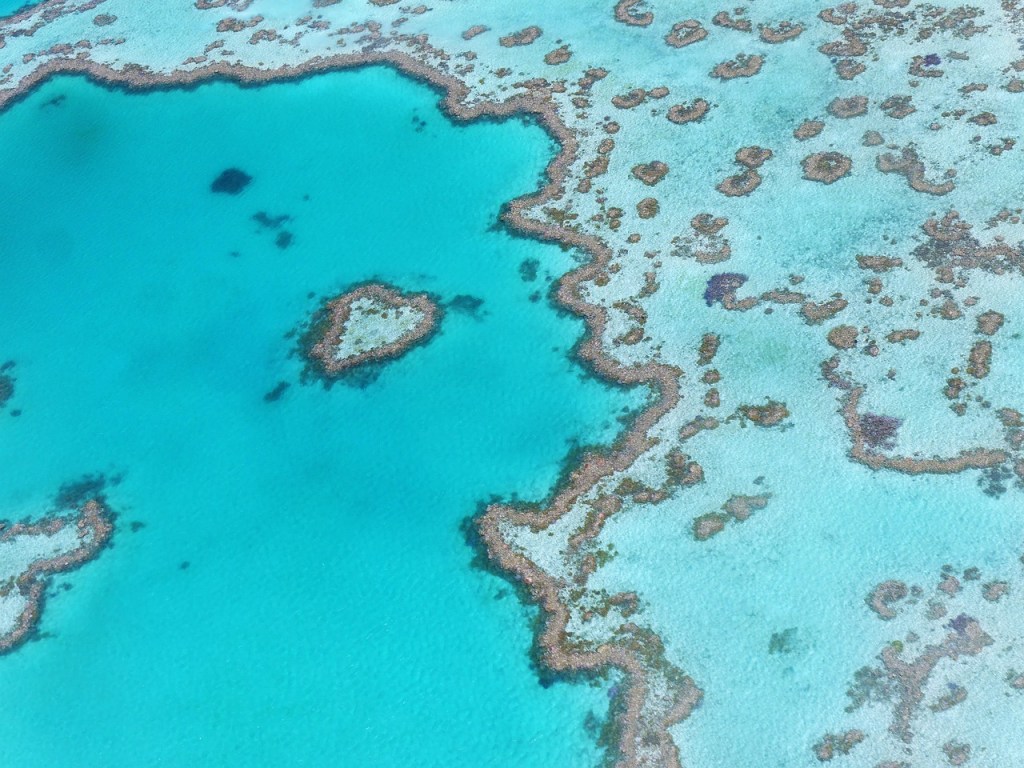
Coral reefs are like underwater cities during a street festival — full of colour, movement, and life. Even though they cover less than 1% of the ocean floor, they support over 25% of all marine life. That’s a quarter of the ocean’s species sharing the reef real estate!

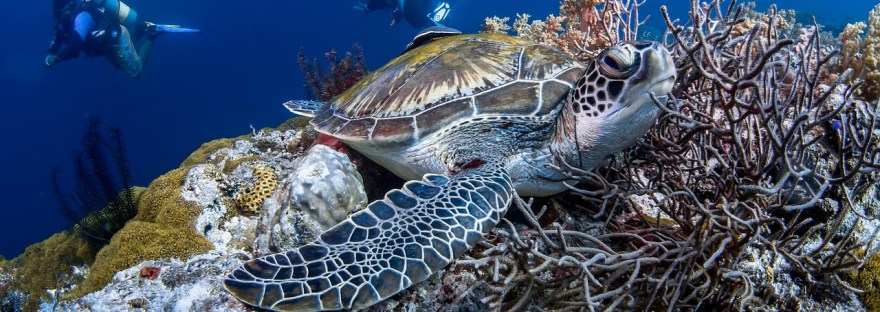
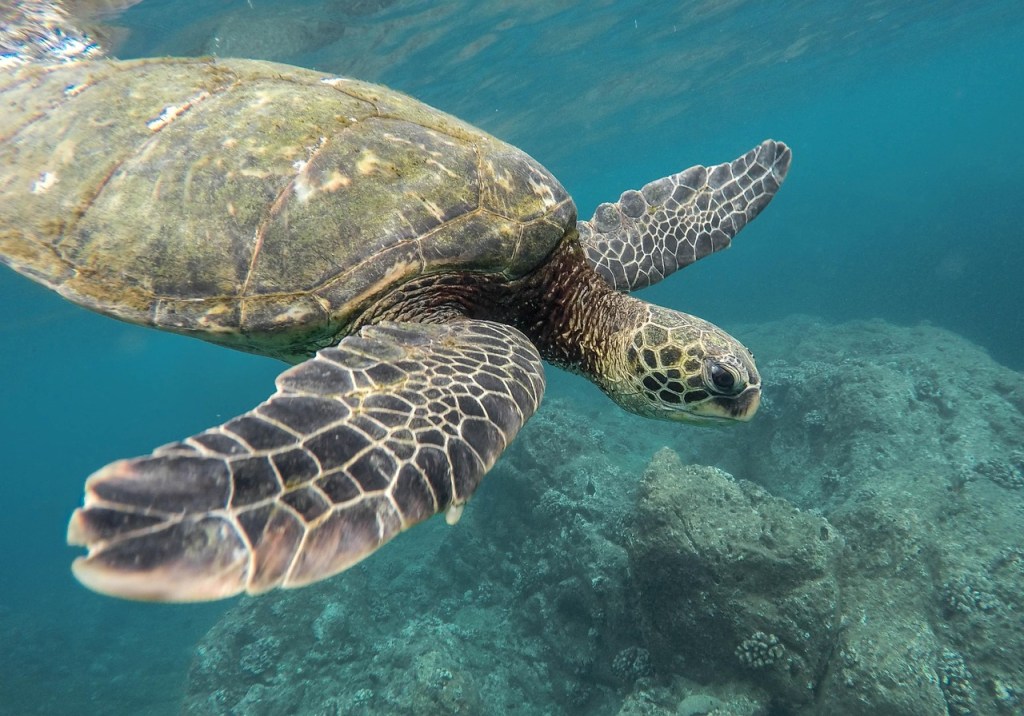
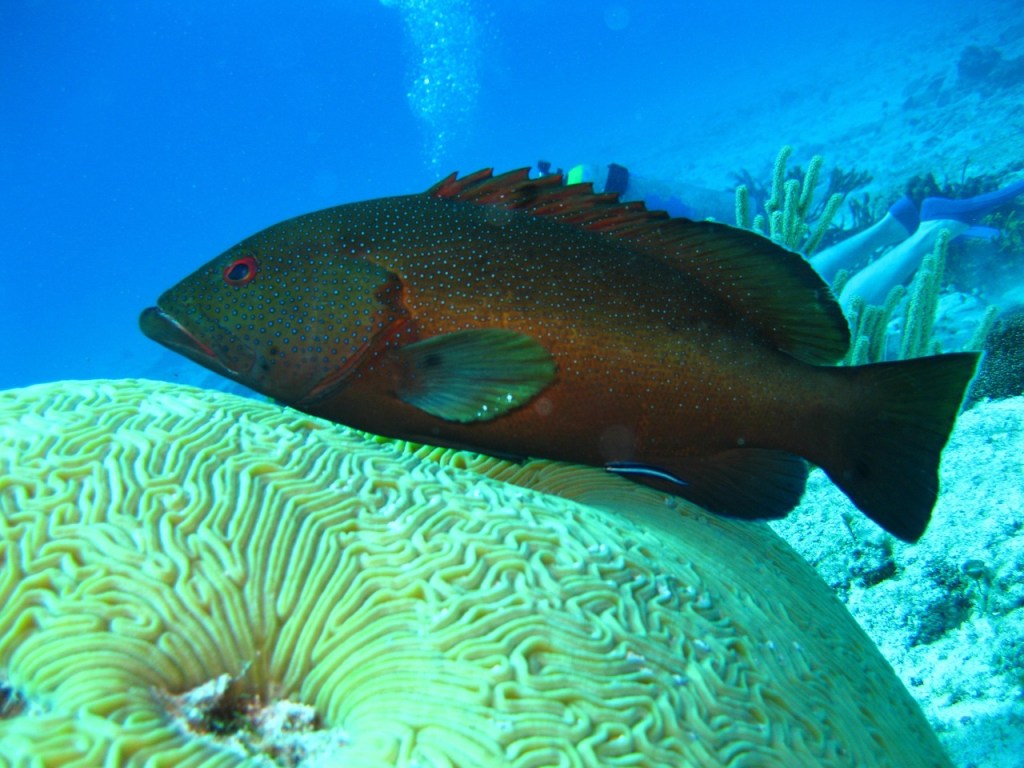
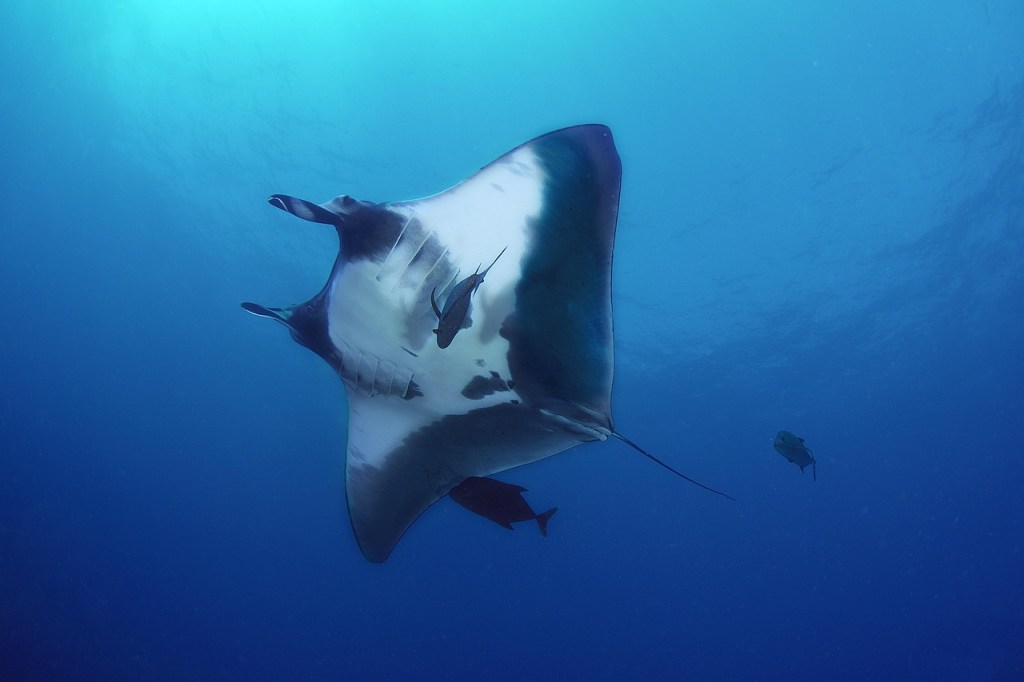
Fish in neon brights, camouflaged crustaceans, sea turtles, starfish, nudibranchs (Google those if you want to see some truly fabulous sea slugs), and even sharks — all rely on coral reefs to live, feed, and breed.

It’s no wonder coral reefs are called the rainforests of the sea. Except, well, with fewer leeches and a lot more fish that look like they’ve escaped from a tropical disco.

Why Should Humans Care?

When I snorkelled Lady Musgrave Reef, one of the pristine coral cays in the Southern Great Barrier Reef, I was absolutely mesmerised. The electric blue tangs darting between coral towers, the graceful sway of anemones, and curious turtles gliding past — it felt like I was floating inside a living kaleidoscope. It’s something I’ll never forget.

Aside from being jaw-droppingly beautiful, coral reefs are super handy for us land-dwellers too:

  • They’re nature’s coastal bodyguards, absorbing wave energy and reducing storm damage and erosion.
  • Over 500 million people depend on reefs for food, fishing income, and tourism.
  • Coral reefs are even pharmaceutical treasure troves, with scientists studying reef organisms to treat cancer, arthritis, bacterial infections, and more.

So next time you’re sipping a fruity drink on a tropical beach, spare a thought for the reef that’s keeping the waves at bay — and maybe even helping future you stay healthy.

Trouble in Paradise

Now, here’s where things get a little heavy. Like every great kingdom, the coral realm is under threat.

Climate Change and Coral Bleaching

Remember those algae roommates we mentioned? Coral needs them to survive. But when ocean temperatures rise, coral gets stressed and evicts the zooxanthellae. The result? Coral bleaching — the coral turns ghostly white and, without its algae, slowly starves.

It’s not just a fashion statement — it’s a warning sign. Prolonged bleaching can lead to widespread reef die-off.

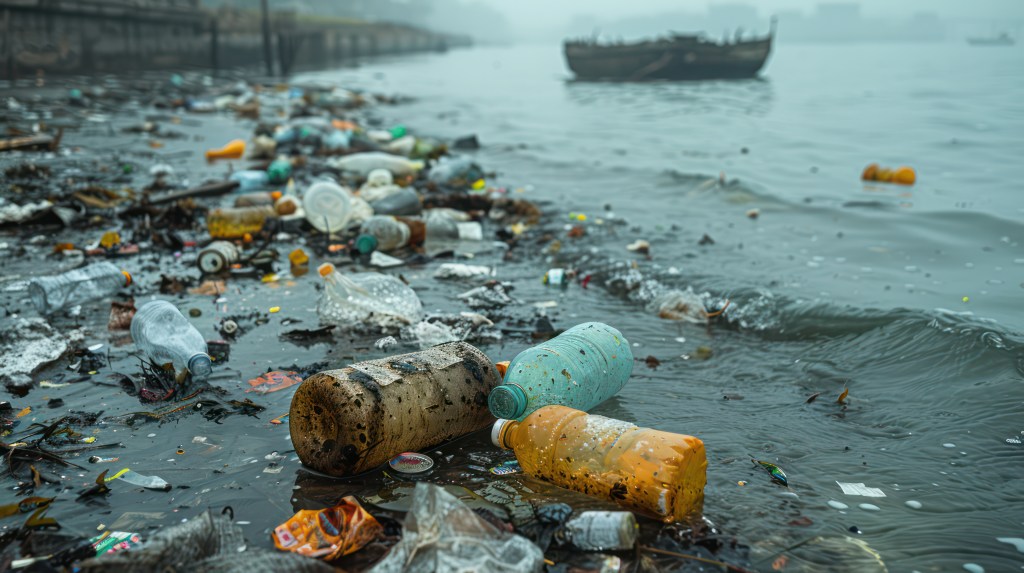
(Garbage in the ocean source: Marine Pollution Stock photos by Vecteezy)

Plastic Pollution and Chemicals

Corals are being choked by plastic debris, which can block sunlight and leach toxins into the water. Even our sunscreens are part of the problem — many contain chemicals like oxybenzone that damage coral DNA.

Yep, your holiday SPF might be giving the reef a headache.

Overfishing

Every reef has its food chain, and overfishing throws it out of whack. For example, parrotfish (the guys who chomp on coral and poop out sand — you’re literally sunbaking on their handiwork) help keep algae from smothering the reef.

Remove too many of them and the algae builds up quickly, smothering the coral until it can’t breathe. Without grazers like parrotfish, the reef struggles to stay healthy.

But Don’t Panic — There’s Hope!

Now for the good news: we can all help keep the Kingdom of Corals alive and thriving. No flippers required!

Here’s what you can do:

  • Reduce your carbon footprint: Ride a bike, use public transport, eat less meat, and switch to renewables where you can.
  • Say no to single-use plastics: Bring your own bags, bottles and straws. Skip the cling wrap.
  • Choose sustainable seafood: Look for the Marine Stewardship Council (MSC) or similar certifications such as the Australian Sustainable Seafood Guide.
  • Use reef-safe sunscreen: Check labels for oxybenzone and octinoxate, and avoid them.
  • Support reef conservation: Donate to organisations or volunteer with marine projects.

Remember, even the smallest actions ripple out — just like waves on a healthy ocean.

Dive Deeper — Watch the Kingdom of Corals Come to Life!

Want to see the reefs in full technicolour? Check out my video “Kingdom of Corals” on Critter Quest Earth via the link below. My YouTube channel’s packed with adventure and the magic of nature! And, for more wild stories and science fun the whole family can enjoy, don’t forget to subscribe to my blog.

From the reef to the rainforest, we’re just getting started!

Please subscribe to receive my latest posts about nature & science straight to your email inbox. 🌏👩🏽‍🔬😀

australia, Critter Quest Earth - Videos, environment, Environmental Lessons, marsupial, science, Uncategorized

Marsupial Magic: Meet Australia’s Pouch-Protecting Wildlife Wonders!

The first time I saw a sugar glider leap through the trees, it didn’t feel real. One moment it was perched quietly on a branch — the next, it was sailing through the dusk like a tiny, furry kite. Australia’s marsupials aren’t just adorable. They’re evolutionary marvels.

But many of them are disappearing before most of us even learn their names.

If you’ve ever felt a quiet awe for the natural world — and a growing worry that we’re losing it — you’re not alone. This blog is for people who want to understand, not just scroll.

Please, subscribe now to discover Australia’s hidden wildlife stories and the science behind saving them.

G’day Nature Lovers!

Have you ever wondered what incredible creatures call Australia home? If you’ve ever found yourself asking, “What exactly is a marsupial?” or simply enjoy watching kangaroos bounce about like nature’s pogo sticks, you’re in for a treat.

Here in the land down under, we’re lucky enough to be surrounded by some of the most unique animals on the planet. From kangaroos and koalas to quolls and dunnarts (say that five times fast), Australia is a marsupial wonderland!

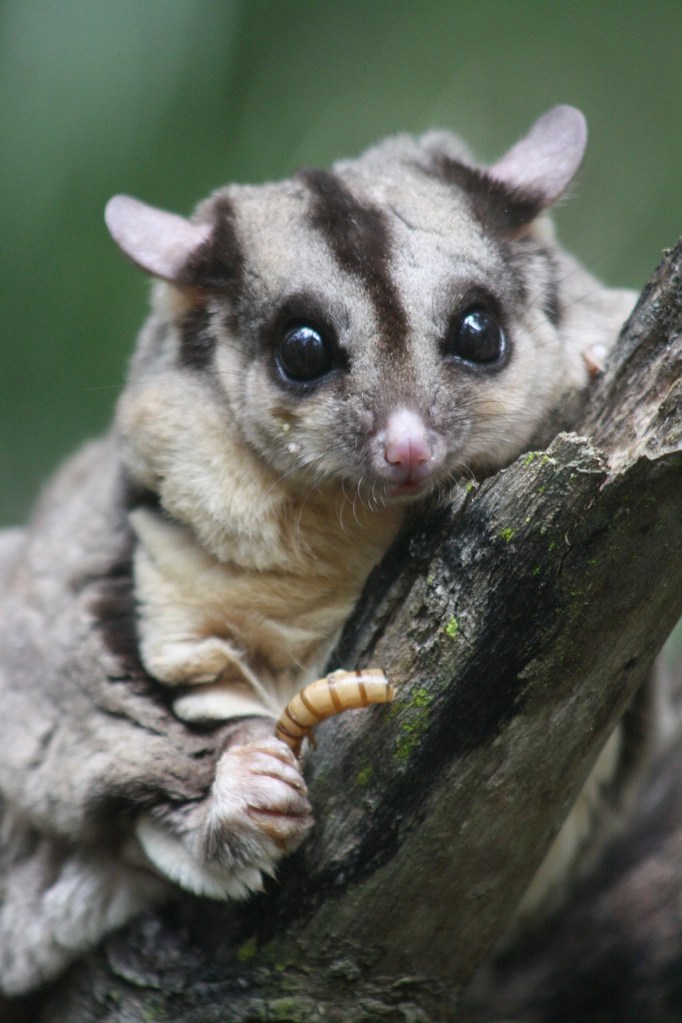
Squirrel Glider

What Makes a Marsupial, a Marsupial?

Let’s start with the basics. Marsupials are a special group of mammals known for one iconic feature: the pouch. That’s right — it’s not just for show. Mother marsupials carry and nurse their young in a pouch, giving their little joeys the best start in life. Unlike placental mammals, marsupial babies are born incredibly underdeveloped and must crawl into the pouch to continue growing.

So next time you see a joey’s head poking out of a kangaroo’s pouch, just know you’re witnessing one of nature’s most fascinating parenting techniques. It’s like a mobile nursery — talk about multitasking!

Our Hopping, Climbing, Burrowing Heroes

Now, let’s meet some of the stars of the marsupial kingdom:

Kangaroos are the high-jumpers of the animal world. With legs built for bouncing and tails made for balance, these iconic Aussies can leap over three metres in a single bound. That’s more than the height of your average front yard tree!

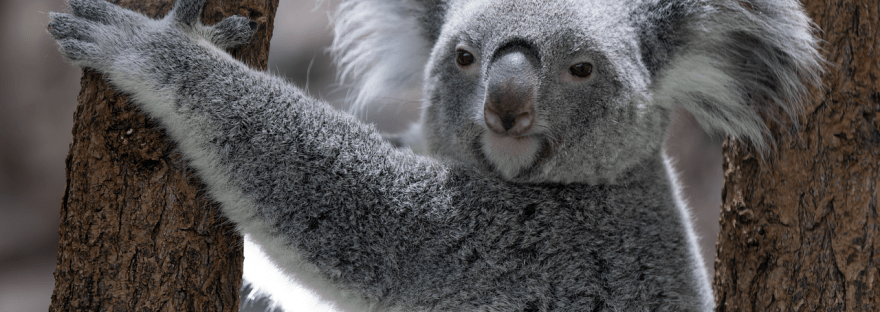
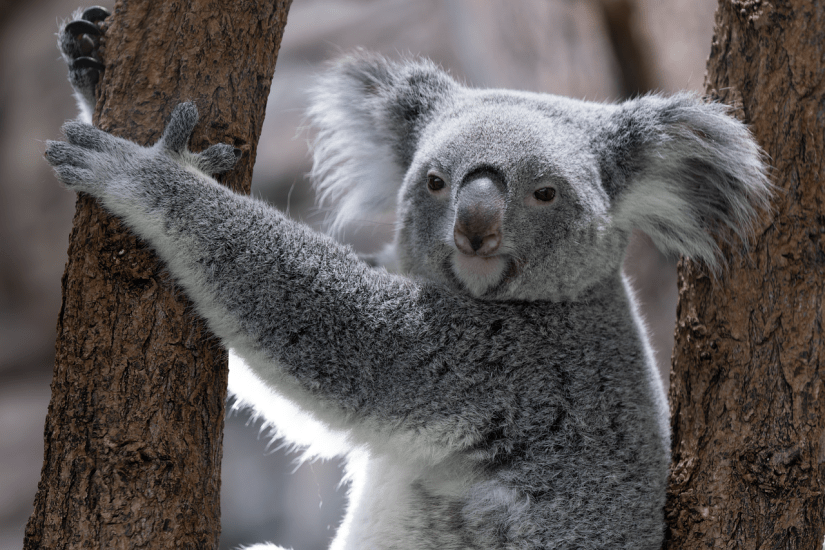
Koalas, our eucalyptus-munching tree-huggers, are nature’s sleepyheads. They spend up to 20 hours a day snoozing — and when they’re not napping, they’re munching on eucalyptus leaves, which are both their food and water source. Talk about low-maintenance!

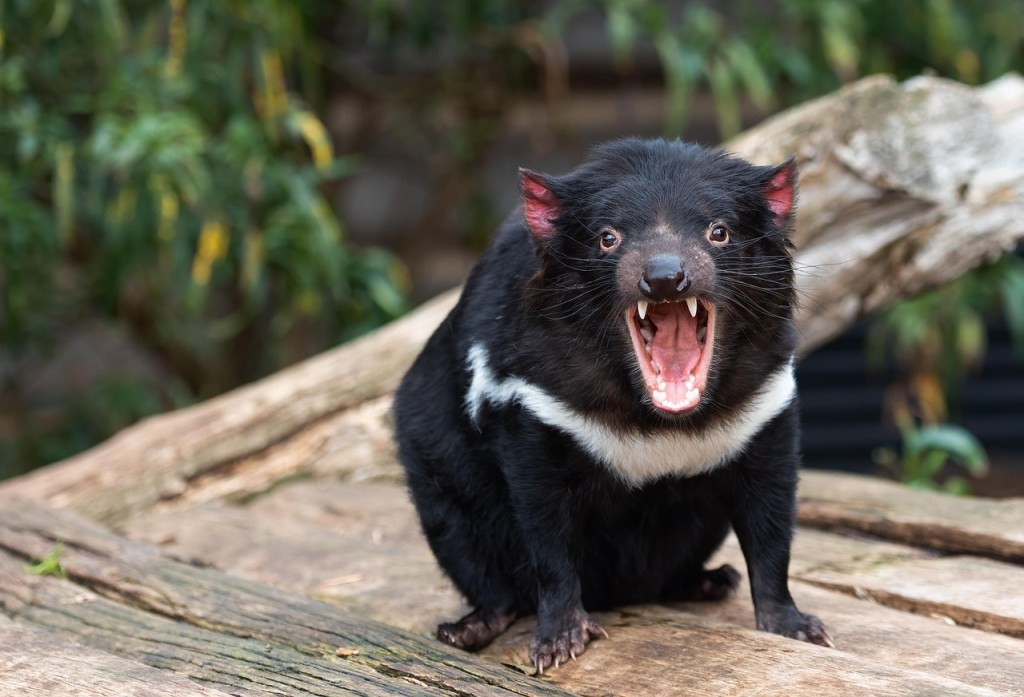
Then we’ve got the Tasmanian devil, a loud little legend with a powerful bite and a critical role in keeping our forests clean by devouring carrion. And no, they don’t spin around in tornadoes (sorry, cartoon fans).

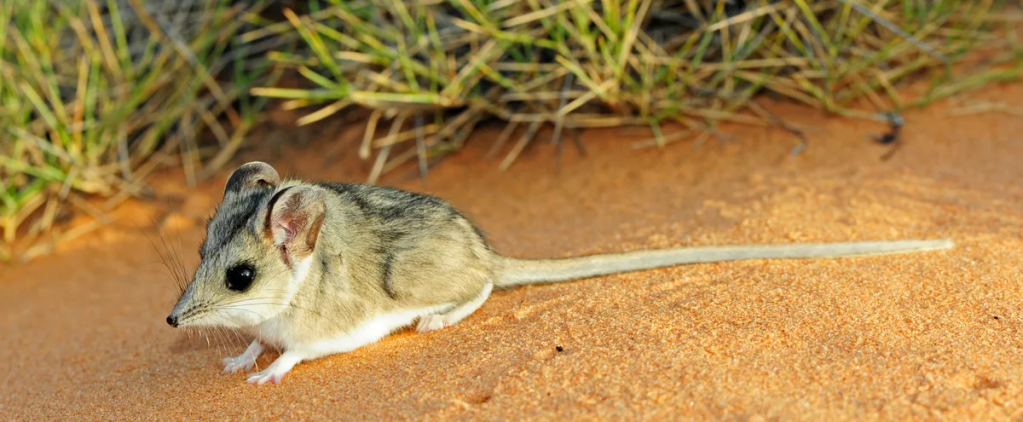
Sandhill Dunnart (Sminthopsis psammophila)” by Alinytjara Wilurara Landscape Board, via Landscape SA, licensed under CC BY 3.0 AU.
Spotted Quoll

Don’t forget about the smaller marsupials too! Dunnarts are tiny insectivores that hunt at night, and quolls are agile predators with a spotted coat and a keen nose. These lesser-known marsupials are just as marvellous — think of them as the indie rockstars of the marsupial scene.

Why Marsupials Matter

Marsupials aren’t just cute — they’re essential to Australia’s ecosystems. Each species plays a role in keeping the balance:

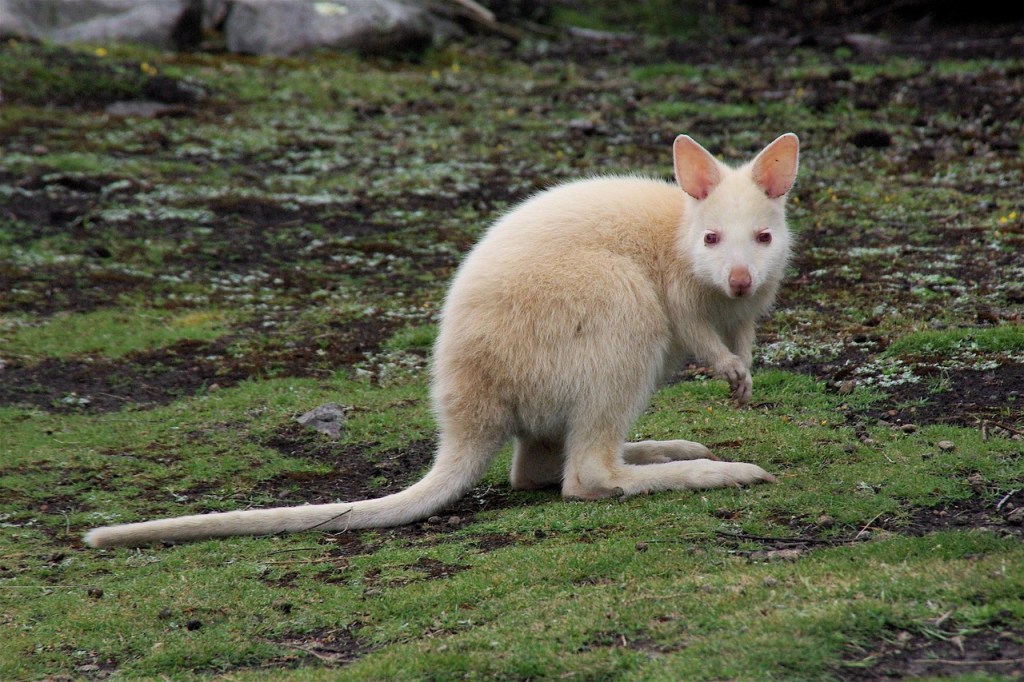
  • Wombats, and wallabies are nature’s landscapers, helping to spread seeds and aerate the soil.
  • Possums act as insect control and pollinators.
  • Carnivorous marsupials like Tasmanian devils are nature’s clean-up crew.

In a way, they’re like the behind-the-scenes crew of a wildlife production — you might not always notice them, but nothing would work quite right without them.

Southern Hairy-Nosed Wombat
Possum

Facing the Threats

Unfortunately, our marsupial mates are under threat. Habitat loss, introduced predators, climate change, and disease are putting many species at risk. From shrinking forests to deadly bushfires, their homes and food sources are disappearing.

The good news? There’s hope. Conservation efforts across Australia are working hard to protect marsupial habitats and educate communities. And that includes you! By learning, sharing, and supporting, you’re part of the solution.

So next time you see a kangaroo on a country drive or a possum in your backyard, give a little nod of respect. These incredible animals are part of Australia’s natural story — and they need all of us to help write the next chapter.

Let’s Keep the Curiosity Hopping!

Loved this quick marsupial deep-dive? Then you’re in the right place. Subscribe to my blog, W. A. Greenly, for more fun and family-friendly nature facts, Aussie wildlife wonders, and ways you can help protect the planet — one post at a time.

And don’t forget to hop over to my YouTube channel, Critter Quest Earth, where you’ll find vibrant, bite-sized videos packed with colour, fun, and science. The marsupial video this article is based on is only 1.5 minutes long — perfect for kids, classrooms, and anyone who loves a quick nature fix!

Together, we can spread the joy of Australia’s wild world, one joey, wombat and giggle at a time.

Thanks for stopping by! Until next time — stay curious, stay kind to nature, and keep adventuring with your eyes wide open. There’s a whole wild world out there waiting to be discovered.

Please subscribe to receive my latest posts and videos all about nature & science straight to your email inbox. 🌏👩🏽‍🔬😀

Critter Quest Earth - Videos, environment, Environmental Lessons, fungi, science

The Zing World of Fungi: Mycelium, Mushrooms & the Wood Wide Web!

Did you know fungi connect entire forests through a vast underground network — like nature’s very own internet? Most people don’t realise how crucial mycelium is to the health of our planet. But understanding this hidden world can change how we see ecosystems, climate resilience, and even ourselves.

If you want to uncover the fascinating science behind the “Wood Wide Web” and learn why fungi might hold keys to solving some of our biggest environmental challenges, you’re in the right place.

Please, take a second and subscribe now to join our community. You’ll recieve clear, evidence-based insights about fungi and how they impact climate and biodiversity straight to your inbox.

The Amazing World of Fungi and Mycelium: A Fun, Family-Friendly Dive Beneath Your Feet

What if we told you that right beneath your feet, a secret world was quietly working its magic? A world of colourful organisms, glowing mushrooms, and an underground internet made of living fibres. No, it’s not science fiction. It’s fungi – one of the planet’s most fascinating and unsung life forms.

Welcome to my blog, where I dig deep (sometimes literally) into the marvels of the natural world. Today, we’re diving head-first into the enchanting and often hilarious world of fungi. And yes, there will be mushroom puns. You’ve been warned.

What Are Fungi, really? (Hint: Not Just Mushrooms on Pizza)

If someone says “fungi” and your first thought is pizza toppings or the mouldy bread at the back of the pantry, you’re not alone – but you’re definitely missing out. Fungi are actually part of a completely separate kingdom of life, distinct from plants and animals. That’s right, these squishy wonders have their own corner in nature’s family tree.

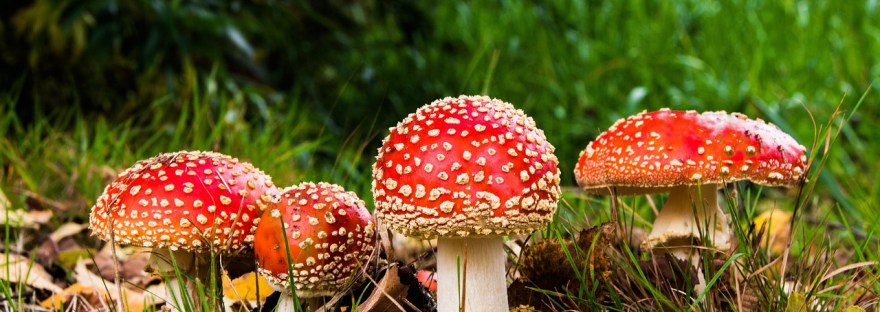
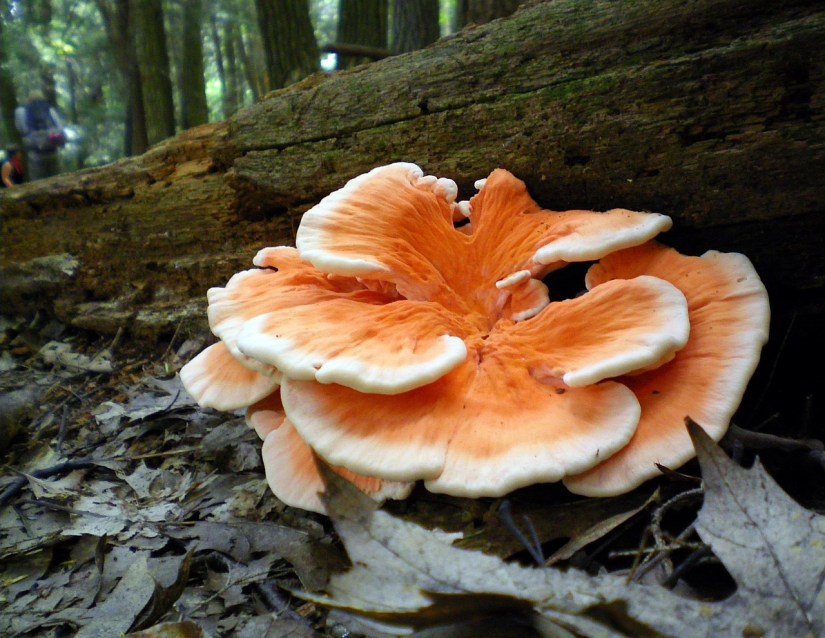
From glowing bioluminescent mushrooms that light up forest floors like tiny lanterns to rainbow-hued caps in every shape imaginable, fungi are anything but boring. Some look like antlers, others like mini parasols, and a few could easily pass for something out of a science fiction flick. You’ll find them thriving in Tassie’s lush rainforests, dotting the red earth of the outback, and nestled in your local bushland.

And the next time you’re out on a family walk, challenge the kids to a fungi-spotting competition. You’ll be surprised how many are hiding in plain sight.

Mycelium: Nature’s Internet (And the Wood Wide Web)

Now, here’s where fungi take it to the next level. Beneath the soil, hidden from view, lies the mycelium – an underground network of fine, thread-like fibres connecting plants, trees, and fungi alike. Picture the internet, but biological and way more ancient.

This isn’t just some fancy fungal footpath. It’s nature’s ultimate communication system. Trees can send nutrients through the mycelium, warn each other of danger, and even support struggling neighbours. Scientists have dubbed it the Wood Wide Web, and we’re not even joking – it’s that clever.

Imagine eavesdropping on a chat between two trees:
“Oi, mate, aphids again.”
“No worries, here’s some extra sugar – hang in there.”

Okay, maybe it’s not quite like that. But the truth is just as incredible.

Fungi: The Quiet Superheroes of the Ecosystem

While they might not fly or wear capes, fungi are genuine ecological heroes! These decomposers work tirelessly to break down dead plants, logs, and leaf litter. Without fungi, we’d be knee-deep in forest gunk and debris – basically, Mother Nature’s dirty laundry pile.

By recycling organic matter into rich, nutritious soil, fungi keep ecosystems balanced and thriving. That soil feeds plants, plants feed animals, and well… you get the idea. It’s all connected, thanks in no small part to these humble heroes beneath the surface.

Next time you’re in the garden or out bushwalking, take a moment to think: is that little mushroom the reason this whole patch of green is alive and well? Probably.

The Threats Facing Our Fungal Friends

Sadly, not all is spore-capped sunshine in the world of fungi. Like many parts of our natural environment, fungi are under threat from habitat destruction, pollution, and climate change.

When the forests go, the fungi go with them. And when fungi disappear, the entire ecosystem starts to unravel – kind of like yanking out the wrong Lego piece from a delicate tower.

It’s easy to forget about the little guys underfoot, but they’re absolutely essential. That’s why conservation efforts are starting to pay more attention to fungi, and why we should all do the same. Protect the habitat, and you protect the web.

Before We View the Video, Let’s Recap – and Let’s Get Out There!

So, to recap for all the kids (and grown-up kids) at home:

  • Fungi are their own kingdom, not just plants in disguise.
  • Mycelium is the forest’s underground internet, helping plants and trees stay in touch.
  • Fungi break down dead stuff and keep ecosystems running like clockwork.
  • They’re threatened by human activity and need our help.
  • Also, glowing mushrooms are real. You’re welcome.

If that’s not worth getting excited about, we don’t know what is.

So, pop on your hiking boots, pack a snack, and head into the wild. Whether you’re in the Dandenong Ranges, Kakadu, or your own backyard, you might just stumble across a mushroom that’s more important than it looks.

Remember, don’t pick or poke – fungi are fragile, and many are protected. Take photos, admire their colours, and maybe even name them something silly like “Sir Spore-a-lot”.

Loved learning about fungi? Want to give nature a helping hand? Too Easy!

Subscribe to Mr. Greenly’s Blog to get fun, family-friendly nature facts delivered straight to you. Share it with your mates, your nan, your teacher — anyone who loves our wild world.

Join the Critter Quest Earth crew on YouTube for more weird, wonderful wildlife and cheeky eco-adventures. It’s fun, educational, and perfect for curious minds of all ages.

Please subscribe to receive my latest posts and videos all about nature & science straight to your email inbox. 🌏👩🏽‍🔬😀

australia, climate change, environment, Marine

A Blooming Problem: What’s Happening on South Australia’s Coastline?

South Australia’s coastline is changing faster than ever — and it’s not just the tides causing concern. If you’ve noticed shifting shorelines, declining wildlife, or worrying news about our oceans, you’re not imagining it. The reality is harsher than many realise, and the time to understand what’s happening is now.

Feeling overwhelmed or unsure about what this means for our environment and communities? You are not alone. Every week, thousands of readers turn to this blog for clear, science-backed explanations that cut through the noise and help you make sense of these urgent changes.

So please, take a second and subscribe below to join a community committed to learning, sharing, and protecting our coastlines and all things nature!

Recently, My Local Coastline in South Australia Has Been Overcome by an Algal Bloom.

In the past few weeks, the usually pristine beaches of South Australia have taken on an eerie new look. Locals walking along the coastlines from Port Noarlunga to the Yorke Peninsula have been greeted not by crashing waves or curious dolphins, but by the grim sight of dead fish scattered along the sand. Reports have included mass deaths of sardines, snapper, and mulloway—species critical to local ecosystems and fisheries alike. The cause? A large-scale algal bloom that’s spread rapidly through Gulf St Vincent and adjacent waters.

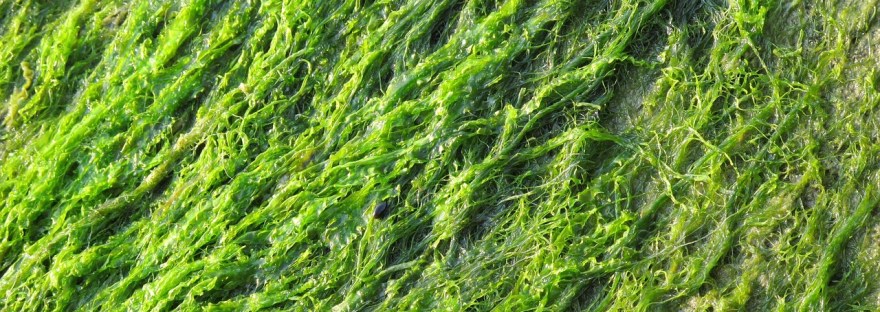
This isn’t just a freak occurrence. Scientists and marine authorities have confirmed that the deaths are linked to a sudden explosion of microscopic algae in coastal waters, triggered by a mix of environmental conditions. These so-called algal blooms might sound harmless—just some greenish water, right? But in reality, they can suffocate marine life, poison ecosystems, and devastate economies that rely on fishing and tourism.

So what exactly are algal blooms, and why are they happening now?

The Wonders and Woes of Algae

Algae are often misunderstood. Though not plants, animals, or fungi, they’re foundational to life on Earth. Ranging from single-celled phytoplankton to massive seaweeds like kelp, algae contribute up to 80% of the planet’s oxygen and are central to aquatic food webs (Field et al., 1998). Without them, the oceans—and life as we know it—would cease to function.

But like many things in nature, balance is key. When that balance tips, algae can go from life-givers to ecosystem killers.

The Emergence of Algal Blooms: Causes and Consequences

What Triggers an Algal Bloom?

An algal bloom occurs when environmental conditions allow algae to grow out of control. The main culprit? Nutrient overload—particularly nitrogen and phosphorus—usually from sources like:

  • Agricultural runoff
  • Urban wastewater
  • Industrial discharge
  • Flood-related land drainage

This process, known as eutrophication, fuels algae like fertiliser fuels weeds. Once the bloom reaches its peak, it often leads to massive die-offs of the very algae that caused it. As these organisms decay, bacteria consume oxygen in the water—leading to hypoxia, or dangerously low oxygen levels (Diaz & Rosenberg, 2008). Marine life either suffocates or flees.

Fish Kills, Toxins, and Rising Temperatures

What’s happening along South Australia’s coast is a textbook case of hypoxia. As the bloom suffocated waters, thousands of fish lost their oxygen supply. This has been compounded by reports of Karenia brevis-like species and other dinoflagellates—algae known to produce powerful toxins—spiking in the region (Hallegraeff, 2003).

Adding fuel to the fire, South Australia has also recently experienced a marine heatwave, with sea surface temperatures significantly above average. These warmer waters have created ideal conditions for algal growth by accelerating photosynthetic activity and extending the lifespan of blooms (Oliver et al., 2018). Marine heatwaves can also reduce ocean mixing, leading to more stable, stratified layers in the water column—conditions that further encourage harmful blooms to thrive (Smale et al., 2019).

Some algal blooms release neurotoxins that bioaccumulate in shellfish and small fish, posing a danger not just to marine life, but also to humans through seafood consumption. These harmful algal blooms (HABs) have led to shellfish harvest closures and health warnings in multiple Australian states in past years.

Why Now? Climate, Floods, and Human Influence

South Australia’s recent bloom didn’t happen in isolation. Several natural and unnatural factors have come together to create a perfect storm:

  • Cool water upwelling off the coast brought nutrient-rich waters to the surface, a natural driver of algal productivity.
  • Stagnant, low-circulation conditions in enclosed gulfs like Spencer Gulf and Gulf St Vincent allowed algae to accumulate.
  • Recent flood events flushed excess nutrients—like nitrogen and phosphorus—into marine environments from far inland (Drewry et al., 2006).
  • Rising ocean temperatures, driven in part by a regional marine heatwave, increased stratification and favoured algae dominance over other marine planktonic organisms (Oliver et al., 2018; Smale et al., 2019).
  • Climate change continues to intensify these conditions, creating a feedback loop where blooms become more frequent, persistent, and damaging (Paerl & Huisman, 2008).

What we’re witnessing is not just a natural occurrence—it’s an ecological event supercharged by human activity and warming seas.

So What Can We Do About It?

1. Reduce Nutrient Pollution

Cutting down fertiliser runoff, improving wastewater treatment, and implementing buffer zones along rivers and coasts are critical steps. We need to address the source, not just the symptoms.

2. Improve Monitoring

Real-time satellite data and water quality testing can help forecast and manage blooms before they cause mass die-offs. Citizen science efforts can also play a key role in early warning systems.

3. Restore Natural Defences

Wetlands and seagrass beds naturally absorb and filter nutrients. Protecting and restoring these habitats can provide long-term buffers against algal overgrowth.

Conclusion: What’s Happened in South Australia?

In short, a toxic cocktail of natural conditions—like upwelling, stagnant currents, and warmer-than-usual ocean temperatures due to a marine heatwave—combined with human-caused impacts—nutrient runoff from floods, climate change, and coastal development—has led to the algal bloom blanketing our coastline.

This event is a stark reminder of the fragile balance within our marine ecosystems. While algae are fundamental to life on Earth, when the balance tips, they can just as easily bring death to the waters they once sustained.

Moving forward, we must take a proactive, science-backed approach to managing water quality, climate impacts, and ocean warming—not just for South Australia, but for coastlines around the globe.

Thanks again for reading — this article’s a labour of love.
If you care about nature and want more people to see science-based stories like this, please take a few seconds to subscribe, like, or share. It’ll help the world more than you think — and it means the world to me too.

When you’re done subscribing and sharing, check out the video below!

References

  • Diaz, R. J., and R. Rosenberg. 2008. “Spreading Dead Zones and Consequences for Marine Ecosystems.” Science 321 (5891): 926–929. https://doi.org/10.1126/science.1156401
  • Drewry, J. J., Newham, L. T. H., and Greene, R. S. B. 2006. “A Review of Nitrogen and Phosphorus Export to Waterways: Context for Catchment Modelling.” Marine and Freshwater Research 57 (8): 757–774. https://doi.org/10.1071/MF05166
  • Field, C. B., Behrenfeld, M. J., Randerson, J. T., and Falkowski, P. 1998. “Primary Production of the Biosphere: Integrating Terrestrial and Oceanic Components.” Science 281 (5374): 237–240. https://doi.org/10.1126/science.281.5374.237
  • Hallegraeff, G. M. 2003. “Harmful Algal Blooms: A Global Overview.” In Manual on Harmful Marine Microalgae, edited by G. M. Hallegraeff, D. M. Anderson, and A. D. Cembella. UNESCO.
  • Oliver, E. C. J., Donat, M. G., Burrows, M. T., Moore, P. J., Smale, D. A., Alexander, L. V., Benthuysen, J. A., et al. 2018. “Longer and More Frequent Marine Heatwaves over the Past Century.” Nature Communications 9: 1324. https://doi.org/10.1038/s41467-018-03732-9
  • Paerl, H. W., and Huisman, J. 2008. “Climate: Blooms Like It Hot.” Science 320 (5872): 57–58. https://doi.org/10.1126/science.1155398
  • Smale, D. A., Wernberg, T., Oliver, E. C. J., Thomsen, M. S., Harvey, B. P., Straub, S. C., Burrows, M. T., et al. 2019. “Marine Heatwaves Threaten Global Biodiversity and the Provision of Ecosystem Services.” Nature Climate Change 9: 306–312. https://doi.org/10.1038/s41558-019-0412-1

australia, dingoes, environment

Native or Wild Dog, the Ecological Significance of Australia’s Dingo is Indisputable.

Theme: Dingo, Nomenclature, Factual, Ecology.

Reading Time: 15 minutes.

Australia’s top predator is fighting for its identity, and its survival.


Are dingoes native wildlife or wild dogs? The answer matters more than you might think. As you’re about to learn, from shaping ecosystems to controlling invasive species, the dingo plays a critical role in Australia’s environmental balance. Yet, the debate rages on.

If you care about evidence-based conservation, ecological truth, and the survival of native species, you’re in the right place, because so do I.

Before reading on, please take a second and subscribe to get clear, grounded, and timely articles that cut through confusion and help you stay informed.

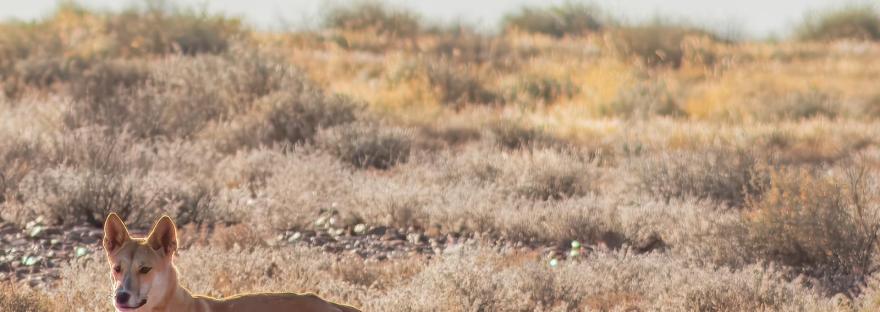
Above: An Australian dingo on the move, 10 km north of The Dingo Fence, South Australia.
(Source: Photograph taken by Jack Bilby, 03/04/2023).

I first became interested in dingoes while travelling from Adelaide to Perth via the Nullarbor in my mid-twenties. At first, it was the roadside signs I drove past stating 1080 baiting in this area which stirred my curiosity but after a bit more research it was the reports and the horrific stories of the 1080 (ten-eighty) baiting’s effects on dingoes (and the occasional traveller’s unlucky canine companion) that grasped my attention. Since then, it’s become apparent to me that the dingo debate is a long and ongoing one across all states and territories of Australia.

Throughout my time at university, the debates surrounding dingoes, their threats, and their ecological significance were always an engaging group discussion. I also regularly see the topic on the news, my Facebook feed and dingoes have even been the expert topic selected by a few contestants on ABC’s The Hard Quiz (which I watch regularly). It seems there’s no doubt about the dingo’s importance to the people of Australia, no matter what side of the dog fence you sit on (pun intended).

More recently, while working on remote properties in Western Australia I had the unfortunate experience of witnessing dingoes trapped in leg traps which were either set with incorrect amounts of strychnine, or with the strychnine in the wrong place meaning the trapped dingoes would have suffered the effects of dehydration for days before the relief of death had we not come across them. I witnessed this first-hand on several occasions and trust me, for anyone with half a conscience it’s a heartbreaking experience. However, what’s equally alarming is often what I see and hear on the topic of dingoes are common misconceptions or just plain myths. For this reason, I’ve taken the time to compile a list of common questions I hear and answered them with facts, not fiction, for both my understanding and yours. I hope this is a useful resource that sparks your interest or just answers some questions you may have. As always, I’d love to know your thoughts or personal experiences on the subject too, so please don’t hesitate to leave a comment at the end.

What’s the difference between a pure dingo and a wild dog?

Dingoes migrated to Australia at least three thousand years ago(1). Due to long-term geographical isolation (allopatric separation), dingoes are now considered genetically, phenotypically, ecologically and behaviourally distinct from other Canis species and are unique to Australia(2,3).

On the other hand, wild dogs are individuals from breeds of domesticated dog (the result of selective breeding by humans) that have strayed from, or been dumped by humans.

How do you identify a pure dingo?

A pure dingo is any dingo that is not hybridised with any wild, domestic or hybrid dog. A pure dingo is usually only identifiable by skull measurements and/or DNA sampling to determine their genetic makeup(4,5). Importantly, contrary to previous beliefs, pelage (fur colour/growth style) has proven to be an unreliable characteristic and should not be used to differentiate dingoes from wild dogs(6).

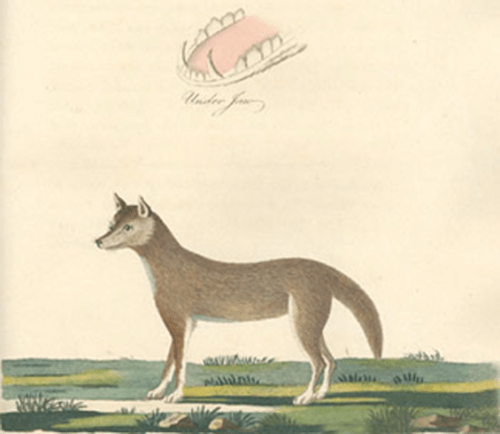
Above: ‘Dog of New South Wales’.

(Source: Mazell, P. and Phillip, A., 1789. Dog of New South Wales. The voyage of Governor Phillip to Botany Bay with an account of the establishment of the colonies of Port Jackson and Norfolk Island, J. Stockdale, London. Available from: http://gutenberg.net.au/ebooks/e00101.html#phillip-46 (accessed: 05 August 2024).

Are there any pure dingoes left?

While it is widely understood that hybridisation threatens the conservation of pure dingo lineage, it is certainly not true to say there aren’t any pure dingoes left.

A study conducted in 2021 sampled the DNA of 5,039 wild canids providing strong evidence that pure dingoes are not just extant (not extinct), but still dominate Australian ecosystems in comparison to wild dogs. Out of the 5,039 dogs sampled, only 31 feral dogs were detected and a further 27 individuals were found to be first-generation dingo x dog hybrids(7).

More recently, a study by Cairns et al. (2023)(29), which utilised more extensive DNA testing procedures (on 402 dingoes from a broad geographical range across Australia), ancestry modelling and biogeographic analyses allowed researchers to identify two key findings:

  • At least four genetically distinct dingo populations (and one captive dingo population) exist in Australia.
  • The presence of dog ancestry in wild dingoes is much less common than previously hypothesised in studies that used less extensive DNA testing procedures.

These studies along with others which have sampled dingo DNA, strongly reject both common misconceptions that dingoes are extinct in the wild and that feral dogs are abundant throughout Australia(7,29). In fact, the sheer rarity of hybrids witnessed in these studies adds support to claims dingoes rarely breed with domestic/wild dogs and in any rare case where they do, the resulting hybrids have little chance of survival in the wild(7,29).

What is the dingo’s scientific name?

Over many years of healthy, scientific debate on the subject of dingo taxonomy and nomenclature, the dingo has been called a variety of scientific names; Canis lupus dingo (classifying it as a subspecies of wolf), Canis familiaris (classifying it as a breed of domestic dog), and Canis dingo (classifying it as a unique species in the genus, Canis), as well as other combinations such as Canis familiaris dingo and Canis lupus familiaris(8). This debate is ongoing and is likely to continue as the answer appears different depending on which species concept (the method used for defining a species) is employed(9).

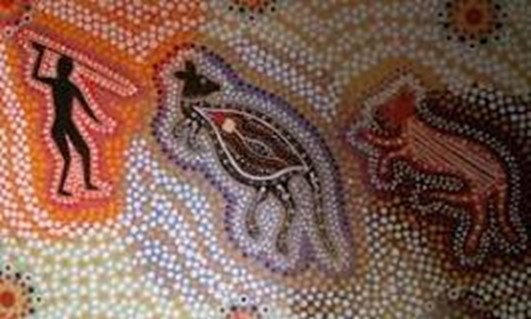
Above: The Warrigal (old dingo) and the Mundurra (hunter) stalking the bunderra (black wallaby)

(Source: https://www.dingoden.net/noble-spirit.html#:~:text=Indigenous%20Australians%20would%20often%20acquire,night%2C%20and%20were%20protected%20jealously).

Did Aboriginal Australians have dingoes as pets?

Yes. Historical sources and Indigenous oral traditions teach us that Aboriginal Australians caught and reared the pups of dingoes as pets(10). The evidence available shows that Aboriginal Australians formed close bonds with dingoes through an active socialisation process from an early age(10). These dingo-human relationships were maintained through time by the passing down of oral lessons teaching children about the dangers of wild and unfamiliar dingoes while also communicating the importance of treating the animals with respect(10). To this day the Australian dingo is not only an Australian icon, but also maintains its long-standing position in First Nation’s culture and daily life as a hunting companion, family member and protector(11).

Are dingoes important to Australian ecosystems?

Yes.

A large body of research now recognises that through direct predator/prey relationships and indirect processes known as trophic cascades, Australia’s apex predator, the dingo, plays a pivotal role in the management of Australia’s biodiversity and ecosystems(12,13,14,15,16).

Feral herbivores such as goats, pigs and rabbits and native mammals including kangaroos, wallabies and wombats as well as birds, lizards and in some places even fish (like on K’gari – Frazer Island) and water buffalo (in Northern Territory) are all the direct prey of dingoes(15). By hunting and reducing the numbers of these animals, the dingo has a direct effect on the populations and survival of such prey animals(13,14,15,16). At the same time, by regulating numbers of native and feral herbivorous animals, dingoes also have an indirect effect on the abundance and diversity of vegetation across Australia(13,14,15,16). In fact, the sheer presence of dingoes has been shown to ward off introduced mesopredators (mid-ranking predators) such as the red fox Vulpes vulpes, or the cat Felix catus(13,14,15,16). This means just by being present in the environment, dingoes directly reduce mesopredator numbers, thus indirectly increasing herbivore numbers and indirectly altering grazing affects on vegetation communities(13,14,15,16).

It is also evident that where dingo numbers have been lost or significantly reduced, cascading losses in various small to medium-sized native mammals, the explosion of herbivore populations resulting in the exhaustion of plant biomass, and the increase of predation rates on native species by red foxes, has increased(14). Studies show that across all scenarios, the predation and presence of dingoes aids the balance of ecosystems and the survival of Australian native plant and animal species(13,14,15,16).

Are dingo numbers declining and what threats do dingoes face?

Australia’s dingo populations are decreasing(17). These are the dingo’s most significant threats:

Habitat loss: Similar to many Australian species, habitat loss is a major and increasing threat to dingoes(18).

Hybridisation: The hybridisation of the pure dingo with wild, domestic and hybrid dogs is an increasing threat to Australia’s unique dingo lineage(18).

Pest status: Whether the dingo is a ‘pest’ or indeed a native species is the subject of much ongoing debate. This ‘pest’ status along with the labelling of dingoes as ‘Wild Dogs’ is responsible, and in most scenarios even provides a licence for, the mass destruction of dingoes by methods such as broad-scale baiting (ten-eighty), trapping and shooting(18).

Just like it did the Tasmanian Tiger, this destruction partnered with other pressing threats leaves Australia’s dingo vulnerable to extinction(17,18).

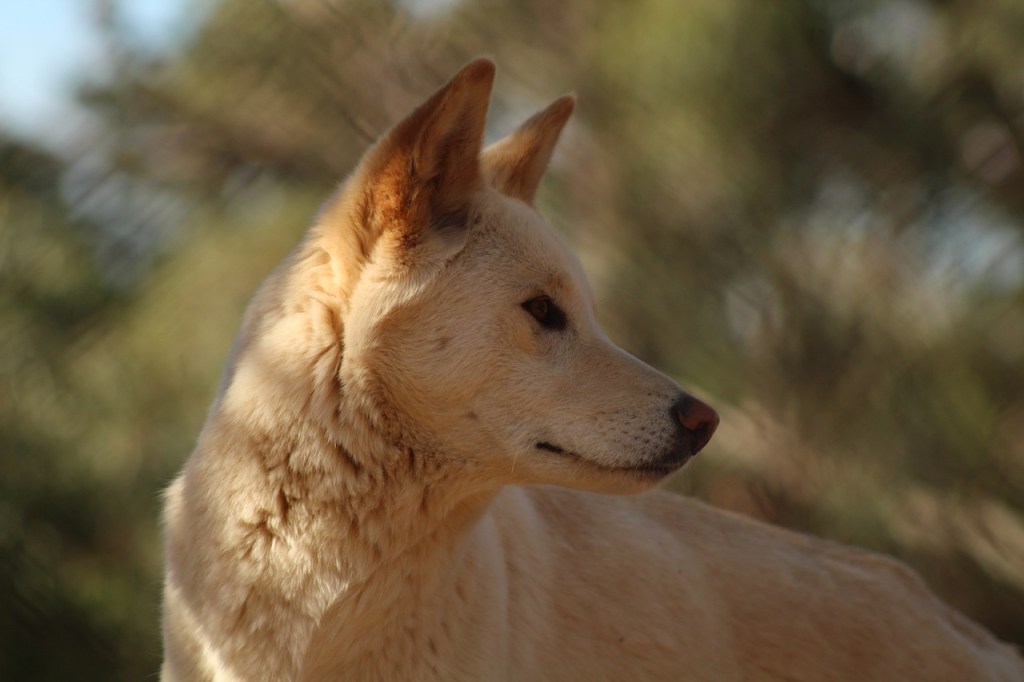
Above: A dingo scans the area.

(Source: https://pixabay.com/users/tahliastantonphotography-8583514/).

Are dingoes a protected species?

The Australian dingo is not a nationally protected species.

Despite once being listed as vulnerable by the International Union for the Conservation of Nature and Natural Resources (IUCN)(17) dingoes were removed after a review in 2019(19,20,21).

Within Australia, the dingoes’ status varies from state to state.

In New South Wales for example, the dingo is still the only Australian mammal not protected under the National Parks and Wildlife Act and is instead recognised as a wild dog under the Rural Lands Protection Act(22,23,24).

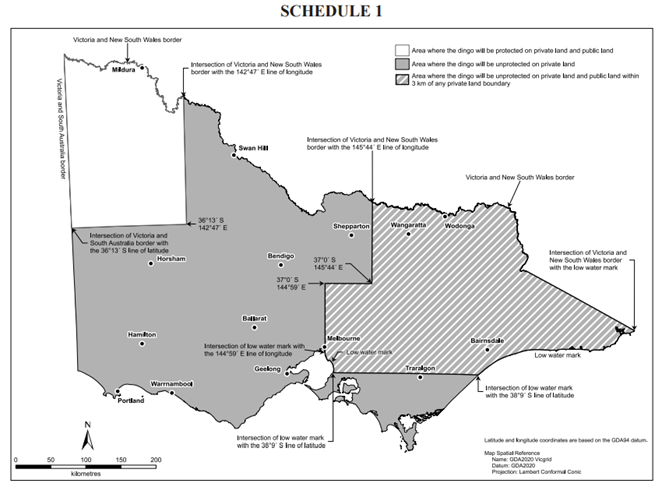
In Victoria in March of 2024, the Government enacted changes to the dingo unprotection order to protect an at-risk population of dingoes in the state’s north-west due to scientific information which identified the population as being at imminent risk of extinction(30). In north-west Victoria the genetically distinct and geographically isolated Big Desert dingoes (known as Wilkerr to the people of the Wotjobaluk Nations) are now protected on both public and private land meaning it is an offence to destroy or harm dingoes within this zone without authorisation(30,31).

Above: Map of Victoria showing the north-west zone where dingoes have full protection (white).

Source: Victorian Government Gazette, 14th March, 2024 – https://www.gazette.vic.gov.au/gazette/Gazettes2024/GG2024S123.pdf).

Elsewhere in Victoria (outside of the defined north-west zone), dingoes are still declared unprotected on private land across the state and on public land within 3 km of the boundaries of any private land in the east of the state(30). In these areas, it is reported that dingoes are being killed in ramped-up efforts to eradicate them for commercial purposes (to eliminate their risk to livestock)(25). As dingoes were removed from the IUCN Red List in 2019, there is also mounting pressure on the Victorian government from the livestock-industry-driven initiative, the National Wild Dog Action Plan, to review and remove the limited protections the dingoes have in the north-west region(20).

The sad reality is that throughout Australia the only true refuge for dingoes in their natural habitat is within National Parks and some designated Conservation land. However, in most cases baiting and other control methods are often permitted on the borders of these supposed safe-havens. Across Australia, the dingo is subject to a range of government-funded controls such as trapping (including inhumane leg trapping), aerial and ground baiting (with for example ten-eighty baits), and even by government-funded hunting bounties(22,24,25,26,27,28).

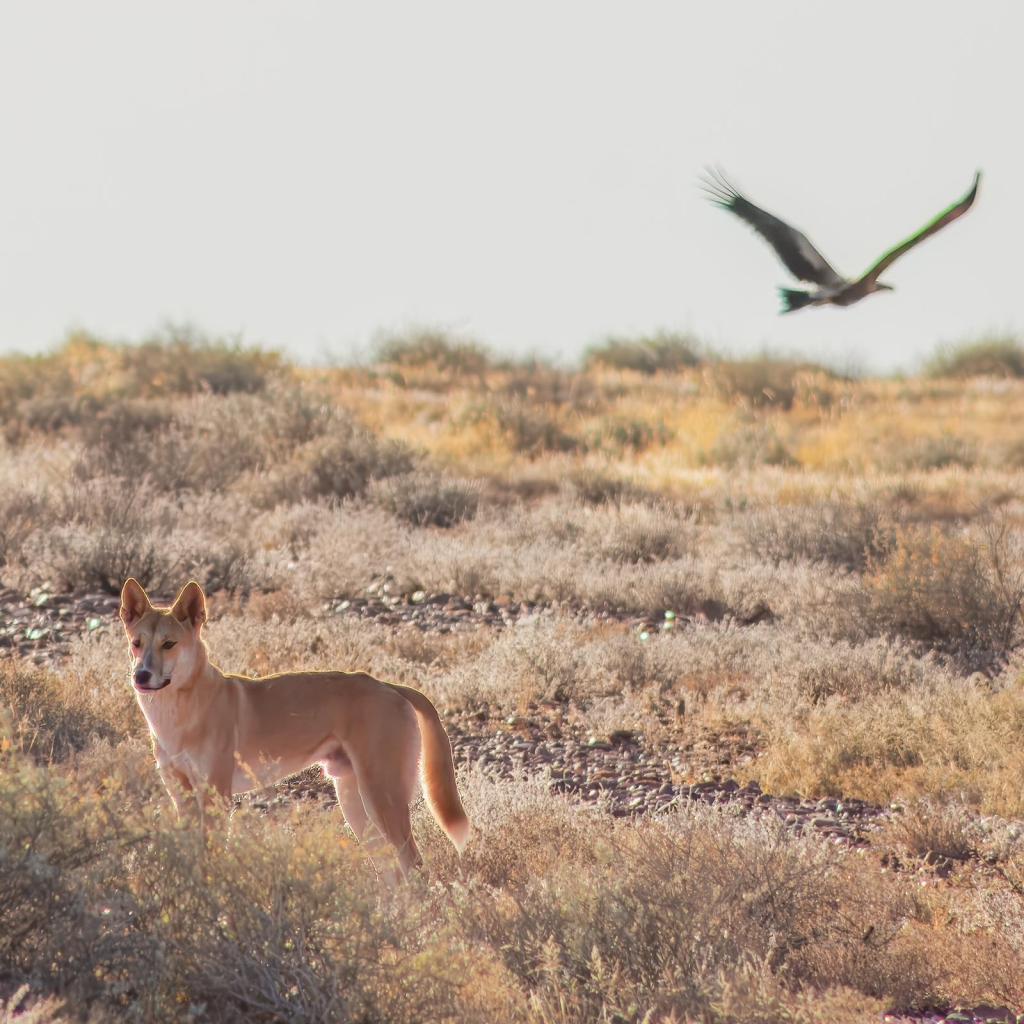
Above: An Australian dingo scans for the threatening Wedge Tailed Eagle, 10 km north of The Dingo Fence, South Australia.

(Source: Photograph taken by Jack Bilby, 03/04/2023).

W. A. Greenly’s take.

Throughout this article, I have (for the most part) kept my feelings and opinions on the matter silent to try and convey only unbiased, factual information. However, if I was asked to give it, I’d first point out that when it comes to the debate surrounding the control of dingoes in Australia, the answer seems to differ largely depending on which of the two main camps you sit in, or ask.

For those ecologically and culturally inclined, it seems evident that the dingo’s isolation of around 3,500 years has undoubtedly led to it being unique in many facets (genetically, phenotypically, ecologically and behaviourally) as well as its status as an apex predator in Australia and its effect on Australia’s biodiversity and ecosystems being well established and further understood every day. Alongside ecological importance, people in this camp also seem to understand that of First Nations people’s cultural and spiritual significance of, and connection to the animal.

On the contrary, there are those in the farming (and supporting bodies) camp. Now, I’ll be very careful here not to paint all people in this camp with the same brush as I know for a fact some very much support working with dingoes, not against them. However, for many with a commercial interest, it seems the non-protection and subsequent controlling of dingoes (to reduce the impacts on their livestock) is priority, despite the broader ecological effects. It also seems to me that the arguments of dingo or wild dog, and pest or native species, are used by parties within this camp as distractions, while the killing goes on. These debates live on despite the evidence that dingo x wild dog hybridisation is rare, and despite the lack of any evidence (certainly that I could find) of any roaming domestic dogs forming wild living, feral populations.

No matter which of the these two camps you sit in, and despite everything I’ve noted above, in my mind there’s only one question that needs answering: Is the dingo’s isolation of around 3,500 years, its resulting global uniqueness and its ecological importance to Australia enough to deem it worth protecting despite the effect on the industries we’ve established here?

For me, the answer is certainly yes.

The dingo, its place of maintaining a balance within Australia’s ecosystems, and its special position culturally and spiritually among Aboriginal Australians were all well and truly established before the arrival of Europeans to this magnificent continent. In my opinion, Australian’s have a duty to protect dingoes and in doing so, maintaining and providing longevity to Australia’s fragile ecosystems. There’s also no doubt in my mind we must respect the long-running relationship between dingoes and Aboriginal Australians.

It’s obvious to me that the longer the debates run, the higher the chance we will lose this incredible animal from Australia resulting in yet more damage to Australia’s unique and already decaying ecosystems. What truly matters should be the importance of dingoes to Australia’s ecosystems and that should be put above whether we humans define dingoes as unique species or wild dog, native animal or pest. More and more research points to the dingo being of conservation value throughout Australia, and it is clear that the removal of dingoes contributes to ecosystem collapse. Protecting Australia’s dingo will go a long way to protecting Australia’s already fragile systems.

So, what do you think?

I’d love to hear your opinion and about your experiences with dingoes. Please comment at the bottom of this page and I’ll be sure to respond.

Thanks for reading. This article’s a labour of love.
If you care about nature and want more people to see science-based stories like this, the answer is simple, just subscribe to my blog, and like or share this article. It helps more than you think, and it also means the world to me.

Thank you,

Enjoy science, nature and the worlds many marvelous critters just as much as I do? Be sure to check out my blog menu for more fascinating readings! See you there!

References:

  1. Balme, J., O’Connor, S. and Fallon, S., 2018. New dates on dingo bones from Madura Cave provide oldest firm evidence for arrival of the species in Australia. Scientific reports8(1), p.9933.
  2. Smith, B. ed., 2015. The dingo debate: origins, behaviour and conservation. CSIRO Publishing.
  3. Smith, B.P., Cairns, K.M., Adams, J.W., Newsome, T.M., Fillios, M., Deaux, E.C., Parr, W.C., Letnic, M., Van Eeden, L.M., Appleby, R.G. and Bradshaw, C.J., 2019. Taxonomic status of the Australian dingo: the case for Canis dingo Meyer, 1793. Zootaxa4564(1), pp.173-197.
  4. Queensland Department of Agriculture and Fisheries (2016) Wild dog fact sheet: Biology, ecology and behaviour. Available at: https://www.daf.qld.gov.au/__data/assets/pdf_file/0003/66153/IPA-Wild-Dog-Fact-Sheet-Biology-Ecology-Behaviour.pdf.pdf (Accessed: 05 August 2024).
  5. Duffy, J. (2019) I’m a dingo: Don’t call me a dog!, Echidna Walkabout Tours. Available at: https://echidnawalkabout.com.au/dingo-not-a-dog/#:~:text=Dingoes%20have%20consistently%20broader%20heads,are%20all%20natural%20dingo%20colours (Accessed: 05 August 2024).
  6. Crowther, M.S., Fillios, M., Colman, N. and Letnic, M., 2014. An updated description of the Australian dingo (C anis dingo M eyer, 1793). Journal of Zoology293(3), pp.192-203.
  7. Cairns, Kylie M., Mathew S. Crowther, Bradley Nesbitt, and Mike Letnic. “The myth of wild dogs in Australia: are there any out there?.” Australian Mammalogy 44, no. 1 (2021): 67-75.
  8. Jackson, S.M., Fleming, P.J., Eldridge, M.D., Archer, M., Ingleby, S., Johnson, R.N. and Helgen, K.M., 2021. Taxonomy of the dingo: It’s an ancient dog. Australian Zoologist41(3), pp.347-357.
  9. Cairns, K.M., 2021. What is a dingo–origins, hybridisation and identity. Australian Zoologist41(3), pp.322-337.
  10. Brumm, A. and Koungoulos, L., 2022. The role of socialisation in the taming and management of wild dingoes by Australian aboriginal people. Animals12(17), p.2285.
  11. Cairns hosts First Nations Dingo Forum [online], (2024). Indigenous.gov.au. [Viewed 13 August 2024]. Available from: https://www.indigenous.gov.au/news-and-media/stories/cairns-hosts-first-nations-dingo-forum
  12. Dingoes [online], (2024). Wildlife. [Viewed 13 August 2024]. Available from: https://www.wildlife.vic.gov.au/our-wildlife/dingoes
  13. Dingo effects on ecosystem visible from space [online], (2021). UNSW Sites. [Viewed 13 August 2024]. Available from: https://www.unsw.edu.au/newsroom/news/2021/02/dingo-effects-on-ecosystem-visible-from-space-
  14. Letnic, M., Ritchie, E.G. and Dickman, C.R., 2012. Top predators as biodiversity regulators: the dingo Canis lupus dingo as a case study. Biological Reviews87(2), pp.390-413.
  15. Dingoes [online], (date unknown). BushHeritageMVC. [Viewed 13 August 2024]. Available from: https://www.bushheritage.org.au/species/dingoes#:~:text=The%20bulk%20of%20their%20diet,known%20to%20hunt%20water%20buffalo!
  16. Dingoes [online], (date unknown). Environment | Department of Environment, Science and Innovation, Queensland. [Viewed 13 August 2024]. Available from: https://environment.desi.qld.gov.au/wildlife/animals/living-with/dingoes
  17. Corbett, L.K. 2008. Canis lupus ssp. dingo. The IUCN Red List of Threatened Species 2008: e.T41585A10484199. http://dx.doi.org/10.2305/IUCN.UK.2008.RLTS.T41585A10484199.en
  18. Bush Heritage Australia (date unknown) Dingoes, BushHeritageMVC. Available at: https://www.bushheritage.org.au/species/dingoes#:~:text=Threats%20to%20Dingoes&text=The%20Dingo%20is%20persecuted%20on,Red%20List%20of%20Threatened%20Species (Accessed: 05 August 2024).
  19. New drive to reinstate wild dog control in north-west Victoria – Sheep Central [online], (2024). Sheep Central. [Viewed 13 August 2024]. Available from: https://www.sheepcentral.com/new-drive-to-reinstate-wild-dog-control-in-north-west-victoria/#:~:text=As%20a%20result%20of%20their,conservation%20concern,%20the%20NWDAP%20said.
  20. Time to reinstate the dingo unprotection order in northwest Victoria – National Wild Dog Action Plan [online], (2024). National Wild Dog Action Plan – Wild Dog Management in Australia. [Viewed 13 August 2024]. Available from: https://wilddogplan.org.au/media_release/time-to-reinstate-the-dingo-unprotection-order-in-northwest-victoria/#:~:text=Last%20week%20the%20Australasian%20Mammal,basis%20for%20the%20Victorian%20Government’s
  21. The IUCN Red List of Threatened Species [online], (no date). IUCN Red List of Threatened Species. [Viewed 13 August 2024]. Available from: https://www.iucnredlist.org/
  22. Conservation (date unknown) Dingo Den Animal Rescue. Available at: https://www.dingoden.net/conservation.html#:~:text=Even%20though%20the%20Dingo%20is,National%20Parks%20and%20Wildlife%20Act (Accessed: 05 August 2024).
  23. National parks and wildlife act 1974 no 80 (date unknown) New South Wales – Parliamentary Councel’s Office. Available at: https://legislation.nsw.gov.au/view/html/inforce/current/act-1974-080 (Accessed: 05 August 2024).
  24. Rural Lands Protection Act 1998 no 143 (date unknown) New South Wales – Parliamentary Councel’s Office. Available at: https://legislation.nsw.gov.au/view/whole/html/inforce/2009-04-07/act-1998-143#:~:text=An%20Act%20to%20provide%20for,and%20for%20the%20functions%20of (Accessed: 05 August 2024).
  25. Cairns, D.K. (2024) Why is this Australian icon being poisoned, trapped and shot?, Animals Australia. Available at: https://animalsaustralia.org/our-work/wildlife/dingoes/ (Accessed: 05 August 2024).
  26. Fisheries, A. and (2024) Wild dog control and the law, Business Queensland. Available at: https://www.business.qld.gov.au/industries/farms-fishing-forestry/agriculture/biosecurity/animals/invasive/wild-dogs/law (Accessed: 05 August 2024).
  27. Wild dogs in Western Australia (date unknown) Agriculture and Food. Available at: https://www.agric.wa.gov.au/state-barrier-fence/wild-dogs (Accessed: 05 August 2024).
  28. Department of Primary Industries and Regions (date unknown) Declared animal policy: Wild dogs and dingoes. Available at: https://pir.sa.gov.au/__data/assets/pdf_file/0007/388159/declared-animal-policy-wild-dog.pdf (Accessed: 05 August 2024).
  29. Cairns, K.M., Crowther, M.S., Parker, H.G., Ostrander, E.A. and Letnic, M., 2023. Genome‐wide variant analyses reveal new patterns of admixture and population structure in Australian dingoes. Molecular Ecology32(15), pp.4133-4150.
  30. Vic.gov.au. (2024). Dingo protection in north-west Victoria. [online] Available at: https://www.vic.gov.au/dingo-protection-north-west-victoria?fbclid=IwZXh0bgNhZW0CMTAAAR2BzxmyAW1nRaOOk2X07QetcTORvpxHyyw6IbmR7RaiqPXZa_Uw854tglY_aem_F9hT7cGqZjIuqTF08y16pA [Accessed 17 Aug. 2024].
  31. ‌BGLC. (2023). Protecting Wilkerr | BGLC. [online] Available at: https://www.bglc.com.au/general-5 [Accessed 17 Aug. 2024].
climate change, environment, Environmental Lessons, Fiction, Uncategorized

Wrong Place, Wrong Time: A Time Travel Tale from the Brave New World

Once a month my local writing group sets a theme for a piece of writing each member will submit. This month’s topic was “Brave New World”.

Brave New World

‘Welcome passengers to Brave New World Futurelines maiden future flight, flight BNWF001. The first-ever flight taking you into the future,’ announced the voice over the in-flight PA system.

The announcement certainly didn’t go unnoticed as everyone on board, bar me, clapped in recognition of what was to be a truly historical journey. Our plane was not too dissimilar to most planes, full of excited passengers and their carry-on luggage, knowing exactly where they were going and when they’d get there. Except, when most planes take off, the passengers on board expect to arrive at their destination within an hour or two, maybe more. Not our plane. Our plane would set down again in just a few minutes time according to our watches, but in the year 2165, some one hundred and forty years from when it departed.

‘This is your captain speaking, today we are expecting smooth time travelling conditions, little if any timebulance, and we will set down as per schedule in the year 2165 in around about fourteen minutes from now. I’ve just been in contact with Sydney Futureport and as pre-empted, they’re expecting our arrival. The tarmac will be clear, and we expect no delays. Sit back, enjoy the futureflight, and dream of a wonderful time in the future.’

Even with just fourteen minutes, I planned to do just that. I’d already located the complimentary inflight magazine and began flicking the pages.

Climate Change. Over Exploitation. Plastic Pollution. Overpopulation.

‘Ugh! No thanks!’ I announced in disgust. As per usual, the headlines were rather distasteful. Gladly, I wouldn’t have to worry about all that where I was going, and I wasn’t going to spend my time reading about it on this futureflight either. I swapped the inflight magazine for the headset I’d located in the back pocket of the seat in front of me and I was just sliding them over my ears when…

‘Exciting isn’t it,’ said the small lady sitting beside me.

In an effort to show I wasn’t interested in idle conversation I overaccentuated the lifting of the headphone from my left ear as I leant closer.

‘Sorry, what’s that?’

‘Exciting isn’t it,’ repeated the lady, her grin almost as wide as the Futureplane was long.

‘Oh yes, indeed,’ I agreed, before quickly turning away and releasing the headset back onto my ear.

By shutting my eyes and leaning back into my chair I thought I had made it obvious I wasn’t up for idle chit-chat. I still heard the woman’s muffled voice saying something, possibly along the lines of ‘What if we aren’t the first to arrive’. But, I wasn’t even sure if she was speaking to me, and I certainly wasn’t opening my eyes to find out. A few more moments passed, and I’d barely flicked through all the optional channels and decided on something before the sound cut out and the Captain’s voice rang over the PA once again.

‘Passengers, we are now reducing time travelling speed and we will be appearing on Sydney Futureport future strip in under around thirty seconds. We hope you’ve had a memorable flight and wish you all the best in the future.’

Just as the captain instructed, about thirty seconds from his announcement the seatbelt light switched off and the cabin door opened. Within a few seconds, the other passengers and I on Brave New World Futurelines maiden future flight were scurrying across the tarmac. We followed the painted arrows on the ground to where they stopped just short of a set of electronic doors not too dissimilar to those we were used to.

‘Hello future migrants, welcome to 2165,’ said a softened electronically charged voice as a small light mounted on the eve above the doors flashed reds and greens in unison with it.

‘Have your passports ready and your medical clear…,’ suddenly, the electronic voice cut out.

We all stood there staring at the small light, not knowing what to do. We waited, half expecting the voice to begin talking again. A couple of minutes went by before a frazzled man approached the door from the inside. We watched as he took a set of keys from his pocket trying a few before using his arms to pry the doors open.

‘Sorry everybody,’ he said. ‘The future is not short of technical problems.’

Just as he paused, the small light dropped out of the eave above his head and hung there, dangling by a lone wire.

‘Or financial problems,’ added the man as he peered up. ‘Everyone, please have your passports and medical clearances ready and follow me. We’ll get you all checked in within a jiffy.’

As we followed, we all sifted through our pockets and carry-on luggage in search of the documents he’d requested we have ready. Looking around, it became obvious that not much was different in this present from the one we’d left a little over six minutes ago. The futureport seemed similar to the airports from 2025. There were possibly some technological advances, all be it in need of repair, and there seemed to be more of a security and police presence. But apart from that, not much seemed different.

‘Here we are then,’ said the man as he stopped by a tall counter that separated us from the attendants sitting behind.

Standing there waiting to be served reminded me of waiting for service at the bank as the attendants were separated from us by not only the tall counter but a thick, glass security screen. The only difference being, here there were several armed security guards observing us.

‘Who’s next?’ asked one of the attendants, raising her arm.

During the short walk from the doors where the man had met us to the desk, I’d been sure to get in front of everybody. I stepped forward. I hoped to speed things up by placing my passport and medical clearance down on the desk face up ready for the attendant.

‘Just off of flight BNWF001, the first flight ever to leave the past,’ I announced proudly. ‘Frank Laidlaw’s the name.’

However, the attendant didn’t seem impressed. She just gave me the faintest of smiles, looked back at her screen, and processed my documents.

‘Ah, okay then. Well, I’ll be needing to book a flight back to the past,’ I said as I looked around. ‘Where can I do that?’

The attendant looked over toward me, then directly at the group of security guards standing nearby.

‘Sir, I regretfully inform you that here in the year 2165 time travel is outlawed. Has been for some decades now,’ explained the attendant.

Immediately I was taken back. How would I ever get back? There must be some way! But voicing these questions and concerns to the attendant didn’t get me anywhere.

‘Sir I’m going to have to ask you to calm down.’

Then I noticed two of the security guards heading over.

‘But there must be some way? There must be something you can do?’

The security guards now stood right by me on either side.

‘I’m finished with this one,’ said the lady, holding out my documents.

But before I could, one of the security guards reached forward and took them from her.

‘Right, come on sir, we’ll show you the way.’

This time I stayed quiet as both the men who now escorted me seemed to be the type not to argue with. They led me out the front door of the futureport where a couple of police officers took up tail following behind, and right up to a large police bus that sat out the front. Strangely, there were several of these lined up, all in a row one behind the other.

‘Right, on you get,’ announced one of the officers from behind me.

‘What?’ I responded in shock. ‘This can’t be, I haven’t done anything. If I was rude in there I apologise. Just let me go and I’ll find some accommodation nearby and be out of your hands.’

‘Ha!’ scoffed the officer. ‘Wrong place, wrong time!’ he mocked me. ‘Typical entitled pasty. You time jumpers just think you can rock up anywhere and live free without causing anyone any issues do you? All while our time suffers, overflowing with pastys like yourself looking to experience the wonderful future. Well, your future is our present, and you’ve ruined it!’

The look of disgust on the pair of officers’ faces was frightening. I didn’t know what to say, and I hadn’t the chance before the security guard shoved me through the door and onto the awaiting bus.

‘Accommodation you say,’ added the other officer as he looked at my passport before he tossed it on board. ‘Well Frank Laidlaw, we’ve got your accommodation sorted!’

‘Oh, thank heavens,’ I said in relief.

‘The timegration camp north of here!’ said the officer, before shutting the door swiftly and locking it behind me.

As I sat there pondering what had just occurred, the other passengers from flight BNWF001 arrived one after the other, each just as shocked as me. It occurred to me, that the woman I had set next to during the futureflight was right. While we were on the first plane that took off destined for the future, it was obvious now we most certainly weren’t the first to arrive here from the past.