
Theme: Planet Earth, Solar System, Science.
Reading Time: 10 minutes.
Please subscribe to receive my latest posts about nature & science straight to your email inbox. 🌏👩🏽🔬😀
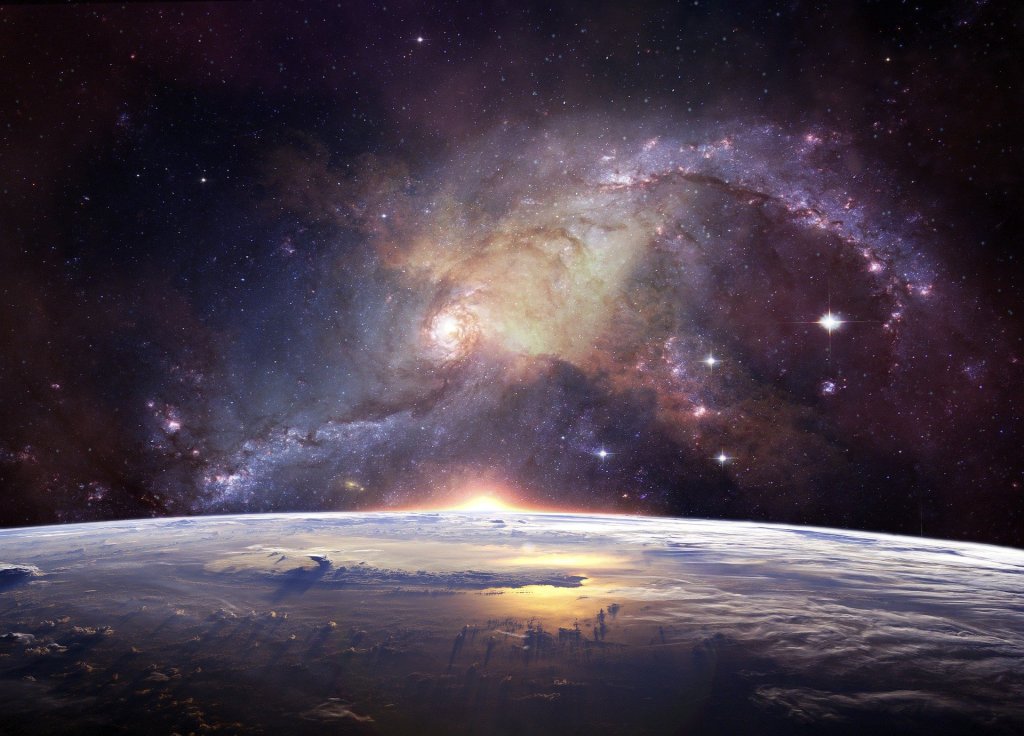
The Earth’s rocky terrain is where we live. Its soils provide the plants we eat, its atmosphere provides the air we breathe, and its hydrological cycle provides the water we must drink. However, our Earth did not always exist, and it did not (and probably will not) always contain the abundance of life many of us take for granted.
It is my opinion many of us fall into the trap of viewing ourselves as separate from our Earth, however, it is important to acknowledge our origins as well as our reliance on Earth as a species and as individuals. After all, it is the formation and then the evolution of our Earth, as well as a few thousand years of perfect weather (for lack of a better term), that we can ultimately thank for our existence.
To begin to understand our Earth we must first understand when it was formed, and how old it is.
How can we tell how old the Earth is?
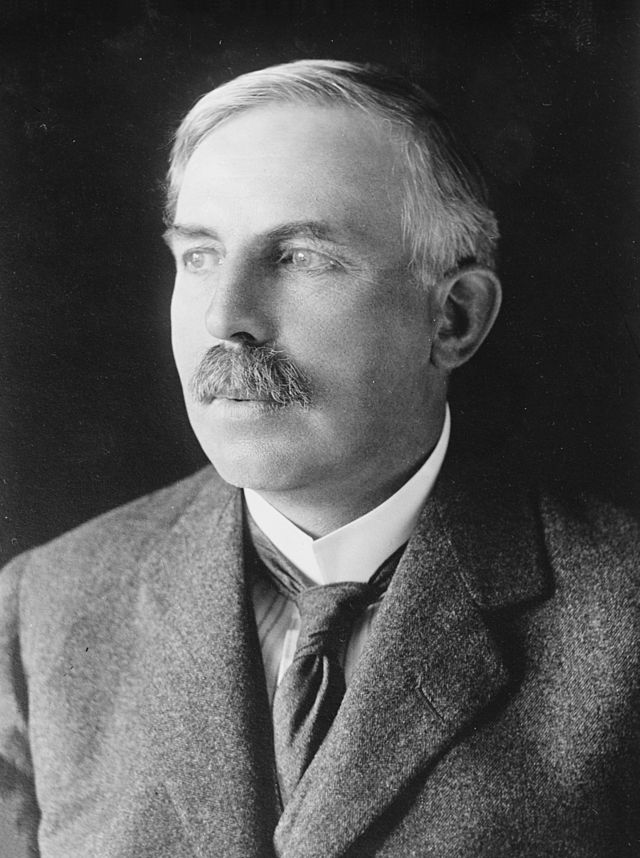
Importantly, before we go on to learn when the Solar System and our Earth was formed, we must pay tribute to the man above, New Zealand chemist and Nobel Prize laureate Ernest Rutherford (1871-1937). He is known amongst the scientific community as “the father of nuclear physics”.
In 1905 Ernest Rutherford invented radiometric dating. Radiometric dating compares the proportion of isotopes in materials. As these isotopes were noted to break down in a predictable amount of time, geologists can use radiometric dating as a tool to estimate the age of the material in question (1).
To estimate the age of the earth, scientists must turn to rocks. Rocks are the oldest components of our Earth that we can study. Techniques such as radiometric dating allow us to estimate the age of the rocks and therefore the age of our Earth (1). Since 1905 many other scientific advancements in the dating methods used for minerals and elements have been made which allow us to further understand our Earth and date it ever more accurately (2).
Interesting notes:
The “Solar System” is what we officially call our planetary system (the Sun and the planets which orbit it etc) (3). Our planetary system (the Solar System) is the only system called the Solar System, named after our sun, Sol (3). More than 3,200 other stars with planets orbiting them have been discovered by astronomers within our galaxy, the Milky Way (3). Although colloquially other planetary systems are often referred to as “solar systems” this is technically incorrect terminology and other planetary systems usually have their own unique names.
How old is Earth?
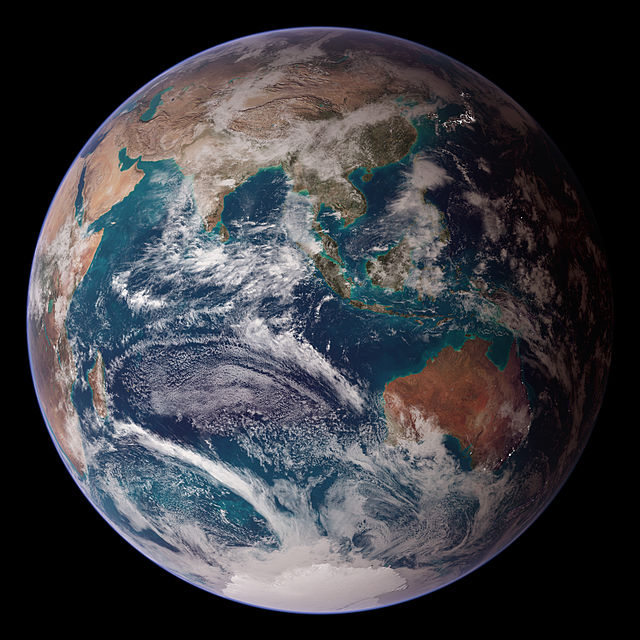
The study of the oldest rocks, minerals and elements on Earth has led to the conclusion that our Earth was formed around 4.54 billion years ago (bya) plus or minus 50 million years (2). While 50 million years of possible error may seem like a considerable amount of time, this is only an allowance of around 1%. Therefore, considering what we are talking about here (the age of a planet), this date can be considered a fairly accurate estimate. This value was arrived at by F. Tera in 1980 who dated lead isotopic compositions from four ancient lead deposits to be 4.54 giga-annum (Ga) old (4).
Importantly it is not just the dating of Earth’s rocks that led to this conclusion. The dating of rocks collected during Moon landings, and the dating of meteorites that have crash-landed onto our Earth have also added support to this conclusion.
Now we know the best estimate of how old our Earth is, we can try to understand how our Earth formed. To do this we must start with the origins of the Solar System.
Interesting notes:
A giga-annum (Ga) and a giga-year (Gyr; Gy), are both common scientific terms derived from Greek ‘gigas’ meaning “giant”. The terms now mean one billion years (109 years). A billion years ago is also often abbreviated to bya, b.y.a or sometimes Byr. All these terms (gig-annum; giga-year; one billion years) and their corresponding abbreviations (Ga; Gyr: Gy; 109 years; bya; b.y.a; Byr) are commonly used throughout the sciences of geology, palaeontology, geophysics, astronomy, and physical cosmology.

How was our Sun formed?
If you were to observe the Solar System more than 4.6 billion years ago it would look unrecognisable. Earth, along with the rest of the Solar System did not exist, at least not in the current forms of a star, planets, and natural satellites (colloquially called moons). As far as we know, all that existed was an enormous cloud of dust and gasses (5).
However, due to an unknown disturbance, that all changed.
This unknown disturbance is thought to have caused our once enormous cloud of dust and gas to begin to spin and pull together forming what astronomers call a solar nebula (5). Once the cloud began to spin, the gasses and dust became concentrated within its centre, which created more momentum assisting the nebula to gain speed (5). After a significant amount of time, the intense forces of gravity now concentrated within the centre drove the faster and more volatile movement of hydrogen atoms (5). This resulted in the fusion of hydrogen protons which formed helium while dispersing mass amounts of energy (5). The ultimate result was the formation of a star (our Sun) around 4.6 billion years ago which now sits at the centre of the Solar System (5).
The Sun has a diameter of around 1.4 million kilometres (865,000 miles) and is the biggest object in the Solar System (6). It is the gravity of our Sun which works like glue holding our entire Solar System together including the planets and our Earth which all orbit around it (6).
But how were the planets and our Earth formed?
Interesting notes:
Our Sun (Sol) and all of the planets in our planetary system (the Solar System) were originally named after Greek and Roman gods and goddesses (7). However, Earth is unique as it is not derived from the same origins. The name Earth is English and derived from the German word ‘erde’ meaning ‘ground’ or ‘soil’ (8). For scientific purposes, when trying to distinguish our planet Earth from the soil or ground we stand on, Earth is often referred to as its other name ‘Terra’, which is derived from Latin. Earth’s natural satellite is called the Moon, and although other planets have natural satellites which are colloquially referred to as moons, officially, the name Moon refers to only the Earth’s natural satellite (9). In Latin the name Luna also means Moon. While for scientific purposes our moon is called ‘Luna’, our Sun ‘Sol’, and our Earth ‘Terra’, in common parlance we rarely use these names.

How were the planets, our Earth, and the Moon formed?
While more than 99% of the matter in the nebula was consumed during the formation of our Sun, the matter that remained continued to orbit our Sun and began to collide creating various compactions located various distances from our Sun (5). Some of these compactions grew so large that they began to maintain their own gravitational pull (5).
That is how Earth is thought to have formed. From what scientists can tell, around 4.54 billion years ago gravity forced the matter that accumulated roughly on the path of Earth’s current orbit around the Sun to compact into a large spherical shaped mass (irregular shaped ellipsoid to be more accurate) (10). Due to the forces provided by gravity this mass collected more and more matter from within its path that it collided with until it grew even larger (10) and formed a planet (Earth), a process known as accretion.
Accretion is the process responsible for not only the planets and dwarf planets in the Solar System but many of those planets’ natural satellites too, including our Moon. Though, some natural satellites are actually “captured” objects which likely formed elsewhere before being drawn by the gravitational pull and falling into orbit around larger planets (11).
Our Earth has a radius of around 6,371 kilometres (3,959 miles) making it the biggest of the terrestrial planets in the Solar System and the fifth largest planet overall (12). Earth sits at an average distance of 150 million kilometres (90 million miles) from the Sun and it takes about eight minutes for the Sun’s light to reach Earth (12).
Now that we have briefly explained the formation of the Solar System, including the Sun, the planets and our Earth, and other natural satellites, this sadly completes our story of the Earth’s age and formation.
However, this is only part of the story, and I have not begun to describe the interesting occurrences, processes, and stochastic events which have helped our Earth evolve from the lump of rock and gasses it once was, into what it is today.
Look out for my next article “Evolution of Earth” which will delve into exactly this so we can understand how Earth came to be the hospitable planet that it is today. A place of rare beauty and home to an abundance of life. Simply subscribe below for notifications.
Interesting notes:
Earth-like planets with a hard surface and which consist of rocks and/or metals are called “terrestrial planets” (13). Commonly these planets contain a molten heavy-metal core, few moons, and recognizable topological features such as mountains, valleys, volcanoes and craters (13). There are four terrestrial planets in the Solar System and they are the four closest planets to the Sun: Mercury, Venus, Earth and Mars (13). It is likely that during the formation of the Solar System there were once more than four terrestrial planets that have since either merged with other planets or have been destroyed (13). The average distance between the Earth and the Sun (150 million kilometres or 90 million miles) is called an astronomical unit (AU) (12). Astronomical Units are used to calculate distances in space so they are easily comparable to the distance between Earth and the Sun (12).
Thoughts? Comments? Post them below and I will be sure to respond.
Thank you and enjoy,
W. A. Greenly.
W. A. Greenly’s upcoming articles include:
- The Mystery of the Australian Megafauna.
- Recycling Made Simple.
- The Climate Change Vortex.
- The Evolution of Earth.
Sources:
- https://www.nationalgeographic.org/article/how-did-scientists-calculate-age-earth/
- Dalrymple, G.B., 2001. The age of the Earth in the twentieth century: a problem (mostly) solved. Geological Society, London, Special Publications, 190(1), pp.205-221.
- https://spaceplace.nasa.gov/other-solar-systems/en/
- Tera, F., 1980. Reassessment of the ‘Age of the Earth’. Carnegie Institution of Washington Year Book, 79, pp.524-531.
- https://www.nationalgeographic.org/article/formation-earth/
- https://solarsystem.nasa.gov/solar-system/sun/in-depth/
- https://coolcosmos.ipac.caltech.edu/ask/68-How-did-Earth-get-its-name-
- https://www.sciencefocus.com/planet-earth/how-did-earth-get-its-name/
- https://www.iau.org/public/themes/naming/#satellites
- https://solarsystem.nasa.gov/planets/earth/in-depth/#otp_formation
- https://solarsystem.nasa.gov/moons/overview/
- https://solarsystem.nasa.gov/planets/earth/in-depth/
- https://www.space.com/17028-terrestrial-planets.html
 W. A. Greenly.