Year 3 Science | Living, Non-Living, Once-Living and Life Cycles of Living Things Aligned with the Australian Curriculum: AC9S3U01
Welcome, curious critters and fantastic educators! 🐸🌻 Have you ever looked at a butterfly and wondered what makes it alive? Why does it flutter and fly, while a rock just sits there doing… well, nothing? And what about fossils? They’re not alive anymore, but they used to be!
If you’ve asked questions like these, you’re thinking like a scientist — and this post is for you.
Let’s explore what makes something living, non-living, or once-living, and take a peek into the life cycles that all living things go through.
🔍 What Is a Living Thing?
All living things share seven key features. These features help us tell the difference between something that is alive, something that was once alive, and something that has never been alive at all. Here they are in no particular order:
Movement
Living things can move. Sometimes it’s easy to spot — like a kangaroo hopping — and sometimes it’s slower or more subtle, like a plant bending towards the sunlight.
Nutrition
All living things need food to get energy.
Animals eat plants or other animals — just like we do!
Plants make their own food from sunlight through photosynthesis.
Respiration
This is the process of turning food into energy. All living things do it — even plants! It might sound tricky, but just remember: respiration is how living things power their bodies.
Excretion
Living things must get rid of waste. It might seem gross (we see you, dung beetle!), but it’s a vital process that keeps organisms healthy — and often helps other life forms too.
Sensitivity (Response to Environment)
Living things can sense and respond to changes around them:
Plants grow towards light or close their leaves when touched.
Worms wriggle when they feel vibrations.
Humans respond to temperature, light, sound… and even emotions!
Reproduction
Living things can make more of themselves. Whether it’s turtles laying eggs or plants making seeds, reproduction is essential to keeping life going.
Growth (and Life Cycles!)
All living things grow and change over time — this is called a life cycle. From baby animals to blooming flowers, every living thing has a journey of growth.
🤔 What About Non-Living and Once-Living Things?
Let’s test your science smarts! Think about each of these — are they living, non-living, or once-living?
🐸 A frog – Living! It moves, eats, grows, and can make more frogs.
🪨 A rock – Non-living. It doesn’t move on its own, eat, or reproduce.
🦴 A fossil – Once-living. It was part of something alive long ago, like a dinosaur!
🌳 A tree – Living. It makes food, grows, and responds to sunlight.
🪵 A log – Once-living. It was once a tree, but it’s no longer alive.
🤖 A toy robot – Non-living. It can move, but only when someone turns it on. It doesn’t grow, eat, or make baby robots!
🌱 Life Cycles in Action
Let’s take a closer look at how living things grow and change.
🐸 Frog Life Cycle
Egg – Frogs begin life as jelly-like eggs in water.
Tadpole – The eggs hatch into tadpoles that swim using tails.
Froglet – Legs grow, tails shrink, and lungs start to work.
Adult Frog – Now they can hop on land, breathe air, and reproduce!
This big change is called metamorphosis.
🌻 Sunflower Life Cycle
Seed – It all starts with a tiny seed.
Germination – Roots and shoots begin to grow.
Seedling – Leaves appear and the plant grows taller.
Adult Plant – It blooms into a sunflower, which makes new seeds!
Even though frogs and sunflowers live in very different environments, they both grow, change, and reproduce — because they are living things.
🧠 Quick Recap: How Can You Tell If Something Is Living?
Ask yourself (note: I’ve changed the order from above):
Move — Can it move?
Respiration — Does it use energy?
Sensitivity — Does it respond to the world around it?
Growth — Does it grow?
Reproduce — Can it make more of itself?
Excretion — Does it get rid of waste?
Nutrition — Does it need food?
If the answer is yes to most of these — it’s alive!
🎒 For Teachers
This blog post supports Year 3 Science, particularly the content description AC9S3U01 from the Australian Curriculum, which focuses on how scientists group things as living, non-living, or once-living based on observable features.
You can use this resource:
As pre-learning before a unit on life cycles or biological classification
Alongside a nature walk, science incursion, or museum visit
Whether it crawls, swims, grows in soil, or even used to be alive — the world is full of clues to what makes something living. By learning to observe and ask questions, we can start seeing life in all its wonderful forms.
Keep questioning, keep exploring — and don’t forget to check out more resources and videos at Critter Quest Education!
South Australia’s coastline is changing faster than ever — and it’s not just the tides causing concern. If you’ve noticed shifting shorelines, declining wildlife, or worrying news about our oceans, you’re not imagining it. The reality is harsher than many realise, and the time to understand what’s happening is now.
Feeling overwhelmed or unsure about what this means for our environment and communities? You are not alone. Every week, thousands of readers turn to this blog for clear, science-backed explanations that cut through the noise and help you make sense of these urgent changes.
So please, take a second and subscribe below to join a community committed to learning, sharing, and protecting our coastlines and all things nature!
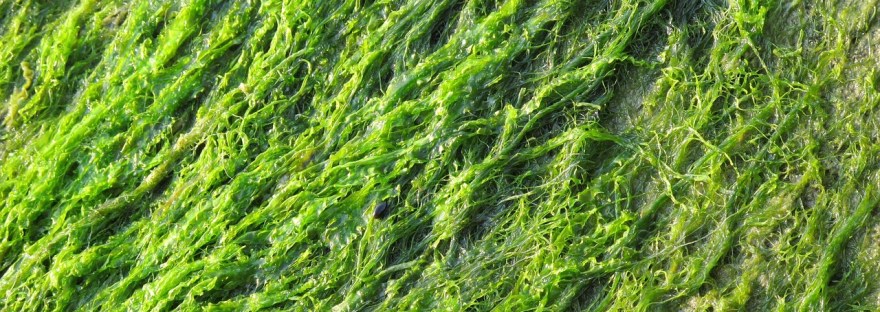
Recently, My Local Coastline in South Australia Has Been Overcome by an Algal Bloom.
In the past few weeks, the usually pristine beaches of South Australia have taken on an eerie new look. Locals walking along the coastlines from Port Noarlunga to the Yorke Peninsula have been greeted not by crashing waves or curious dolphins, but by the grim sight of dead fish scattered along the sand. Reports have included mass deaths of sardines, snapper, and mulloway—species critical to local ecosystems and fisheries alike. The cause? A large-scale algal bloom that’s spread rapidly through Gulf St Vincent and adjacent waters.
This isn’t just a freak occurrence. Scientists and marine authorities have confirmed that the deaths are linked to a sudden explosion of microscopic algae in coastal waters, triggered by a mix of environmental conditions. These so-called algal blooms might sound harmless—just some greenish water, right? But in reality, they can suffocate marine life, poison ecosystems, and devastate economies that rely on fishing and tourism.
So what exactly are algal blooms, and why are they happening now?
The Wonders and Woes of Algae
Algae are often misunderstood. Though not plants, animals, or fungi, they’re foundational to life on Earth. Ranging from single-celled phytoplankton to massive seaweeds like kelp, algae contribute up to 80% of the planet’s oxygen and are central to aquatic food webs (Field et al., 1998). Without them, the oceans—and life as we know it—would cease to function.
But like many things in nature, balance is key. When that balance tips, algae can go from life-givers to ecosystem killers.
The Emergence of Algal Blooms: Causes and Consequences
What Triggers an Algal Bloom?
An algal bloom occurs when environmental conditions allow algae to grow out of control. The main culprit? Nutrient overload—particularly nitrogen and phosphorus—usually from sources like:
Agricultural runoff
Urban wastewater
Industrial discharge
Flood-related land drainage
This process, known as eutrophication, fuels algae like fertiliser fuels weeds. Once the bloom reaches its peak, it often leads to massive die-offs of the very algae that caused it. As these organisms decay, bacteria consume oxygen in the water—leading to hypoxia, or dangerously low oxygen levels (Diaz & Rosenberg, 2008). Marine life either suffocates or flees.
Fish Kills, Toxins, and Rising Temperatures
What’s happening along South Australia’s coast is a textbook case of hypoxia. As the bloom suffocated waters, thousands of fish lost their oxygen supply. This has been compounded by reports of Karenia brevis-like species and other dinoflagellates—algae known to produce powerful toxins—spiking in the region (Hallegraeff, 2003).
Adding fuel to the fire, South Australia has also recently experienced a marine heatwave, with sea surface temperatures significantly above average. These warmer waters have created ideal conditions for algal growth by accelerating photosynthetic activity and extending the lifespan of blooms (Oliver et al., 2018). Marine heatwaves can also reduce ocean mixing, leading to more stable, stratified layers in the water column—conditions that further encourage harmful blooms to thrive (Smale et al., 2019).
Some algal blooms release neurotoxins that bioaccumulate in shellfish and small fish, posing a danger not just to marine life, but also to humans through seafood consumption. These harmful algal blooms (HABs) have led to shellfish harvest closures and health warnings in multiple Australian states in past years.
Why Now? Climate, Floods, and Human Influence
South Australia’s recent bloom didn’t happen in isolation. Several natural and unnatural factors have come together to create a perfect storm:
Cool water upwelling off the coast brought nutrient-rich waters to the surface, a natural driver of algal productivity.
Stagnant, low-circulation conditions in enclosed gulfs like Spencer Gulf and Gulf St Vincent allowed algae to accumulate.
Recent flood events flushed excess nutrients—like nitrogen and phosphorus—into marine environments from far inland (Drewry et al., 2006).
Rising ocean temperatures, driven in part by a regional marine heatwave, increased stratification and favoured algae dominance over other marine planktonic organisms (Oliver et al., 2018; Smale et al., 2019).
Climate change continues to intensify these conditions, creating a feedback loop where blooms become more frequent, persistent, and damaging (Paerl & Huisman, 2008).
What we’re witnessing is not just a natural occurrence—it’s an ecological event supercharged by human activity and warming seas.
So What Can We Do About It?
1. Reduce Nutrient Pollution
Cutting down fertiliser runoff, improving wastewater treatment, and implementing buffer zones along rivers and coasts are critical steps. We need to address the source, not just the symptoms.
2. Improve Monitoring
Real-time satellite data and water quality testing can help forecast and manage blooms before they cause mass die-offs. Citizen science efforts can also play a key role in early warning systems.
3. Restore Natural Defences
Wetlands and seagrass beds naturally absorb and filter nutrients. Protecting and restoring these habitats can provide long-term buffers against algal overgrowth.
Conclusion: What’s Happened in South Australia?
In short, a toxic cocktail of natural conditions—like upwelling, stagnant currents, and warmer-than-usual ocean temperatures due to a marine heatwave—combined with human-caused impacts—nutrient runoff from floods, climate change, and coastal development—has led to the algal bloom blanketing our coastline.
This event is a stark reminder of the fragile balance within our marine ecosystems. While algae are fundamental to life on Earth, when the balance tips, they can just as easily bring death to the waters they once sustained.
Moving forward, we must take a proactive, science-backed approach to managing water quality, climate impacts, and ocean warming—not just for South Australia, but for coastlines around the globe.
Thanks again for reading — this article’s a labour of love. If you care about nature and want more people to see science-based stories like this, please take a few seconds to subscribe, like, or share. It’ll help the world more than you think — and it means the world to me too.
When you’re done subscribing and sharing, check out the video below!
References
Diaz, R. J., and R. Rosenberg. 2008. “Spreading Dead Zones and Consequences for Marine Ecosystems.” Science 321 (5891): 926–929. https://doi.org/10.1126/science.1156401
Drewry, J. J., Newham, L. T. H., and Greene, R. S. B. 2006. “A Review of Nitrogen and Phosphorus Export to Waterways: Context for Catchment Modelling.” Marine and Freshwater Research 57 (8): 757–774. https://doi.org/10.1071/MF05166
Field, C. B., Behrenfeld, M. J., Randerson, J. T., and Falkowski, P. 1998. “Primary Production of the Biosphere: Integrating Terrestrial and Oceanic Components.” Science 281 (5374): 237–240. https://doi.org/10.1126/science.281.5374.237
Hallegraeff, G. M. 2003. “Harmful Algal Blooms: A Global Overview.” In Manual on Harmful Marine Microalgae, edited by G. M. Hallegraeff, D. M. Anderson, and A. D. Cembella. UNESCO.
Oliver, E. C. J., Donat, M. G., Burrows, M. T., Moore, P. J., Smale, D. A., Alexander, L. V., Benthuysen, J. A., et al. 2018. “Longer and More Frequent Marine Heatwaves over the Past Century.” Nature Communications 9: 1324. https://doi.org/10.1038/s41467-018-03732-9
Smale, D. A., Wernberg, T., Oliver, E. C. J., Thomsen, M. S., Harvey, B. P., Straub, S. C., Burrows, M. T., et al. 2019. “Marine Heatwaves Threaten Global Biodiversity and the Provision of Ecosystem Services.” Nature Climate Change 9: 306–312. https://doi.org/10.1038/s41558-019-0412-1
What if you could explain one of nature’s most mind-blowing transformations — from egg to caterpillar to butterfly — in a way that sparks curiosity in kids and adults alike?
This post dives into the science and wonder of metamorphosis, breaking it down in clear, engaging terms you can actually use. Whether you’re an educator, parent, or just someone who never stopped being fascinated by nature, you’re in the right place.
Please, subscribe now to join our community and get more bite-sized, science-backed nature content that makes learning feel like discovery — not homework.
From Egg to Airborne Wonder: The Magical Metamorphosis of a Butterfly
Ever found yourself staring at a fluttering butterfly and wondering how such delicate beauty ever came to be? What begins as a tiny egg barely visible to the naked eye somehow becomes one of nature’s most enchanting creatures. It’s a process filled with mystery, transformation, and sheer biological brilliance — welcome to the spellbinding journey of metamorphosis.
This is Eco Quest Earth, and here we celebrate the spectacular in the everyday wild. If you’re as captivated by the natural world as we are, don’t forget to subscribe — and now, let’s dive into one of nature’s greatest makeovers.
It all starts with an egg
The story of a butterfly begins humbly — with an egg no bigger than a pinhead. These miniature marvels are laid with care on the underside of leaves, usually by a female butterfly who has chosen the perfect plant to support her offspring’s growth. Often, these are host plants that caterpillars feed on once hatched. Though small and unassuming, each egg is packed with potential, the very first stage of a journey that will defy belief.
The Voracious Caterpillar
Not long after, the egg hatches, and out wiggles a caterpillar — tiny, wriggly, and absolutely ravenous. And this little creature has one job: eat.
With an appetite that would put a teenage boy to shame, the caterpillar begins its feeding frenzy, devouring leaf after leaf. Its rapid growth is nothing short of astonishing. To accommodate its ballooning size, it sheds its skin — not once, but multiple times.
Did you know? Some caterpillars can increase their body mass by up to 1000 times during this stage. That’s like a newborn baby growing into the size of a humpback whale in a few weeks!
This intense growth prepares it for the most mysterious stage yet.
The Chrysalis: Nature’s Transformation Chamber
At a certain point, the caterpillar stops eating, attaches itself to a safe spot (often hanging from a branch or the underside of a leaf), and begins to form a protective casing around its body — the chrysalis, also known as the pupa.
This is the quiet stage, but don’t be fooled. Inside that casing, a biological miracle is unfolding. The caterpillar literally breaks itself down at a cellular level. Its tissues are restructured, reshaped, and rebuilt. Eyes, wings, antennae — all emerge from what seems like total dissolution. It’s one of nature’s most dramatic transformations, and we still don’t fully understand every detail of how it happens.
The Grand Reveal: A Butterfly is Born
After days or even weeks inside the chrysalis (depending on the species and environmental conditions), something begins to stir. The chrysalis darkens, and the once-hidden butterfly pushes its way out, crumpled and wet but unmistakably elegant.
Its wings are soft and folded at first, but within hours, they expand and dry, growing stronger and more colourful by the minute. And then — with one final push — the butterfly takes flight.
It’s a sight to behold: a once-grounded caterpillar now dancing through the air with grace and purpose.
More Than Just a Pretty Face
Beyond their beauty, butterflies play a vital role in our ecosystems. As pollinators, they help flowers reproduce, support food crops, and sustain biodiversity. They are quiet workers behind the scenes, ensuring our gardens bloom and our planet thrives.
But their existence is under threat. Habitat loss, climate change and pesticide use are pushing many butterfly species to the brink. In Australia and around the world, butterfly populations are declining at alarming rates — a loss that would ripple through ecosystems far and wide.
How You Can Help
The good news? Every backyard can be a sanctuary. By planting native flowers and avoiding chemical pesticides, you create a haven for butterflies and other pollinators. Small changes can have a big impact — and the flutter of wings in your garden might just be the thank you nature sends back.
Love learning about the hidden wonders of nature? Subscribe to our blog, and join us as we explore more magical moments from the natural world, all in bite-sized bursts.
Because nature never takes a break — and neither do we.
When you’re done subscribing and sharing, check out the video below!
I wrote this piece to enter it into the City of Port Adelaide Enfield Nature Writing Competition. The requirements were a short story that must relate to any land, water or marine environment in the City of Port Adelaide Enfield area. My piece, Blue, was heavily inspired by my uncle’s connection with the region. Unfortunately, it did not make it to the finals but hopefully, others can still enjoy it.
Blue
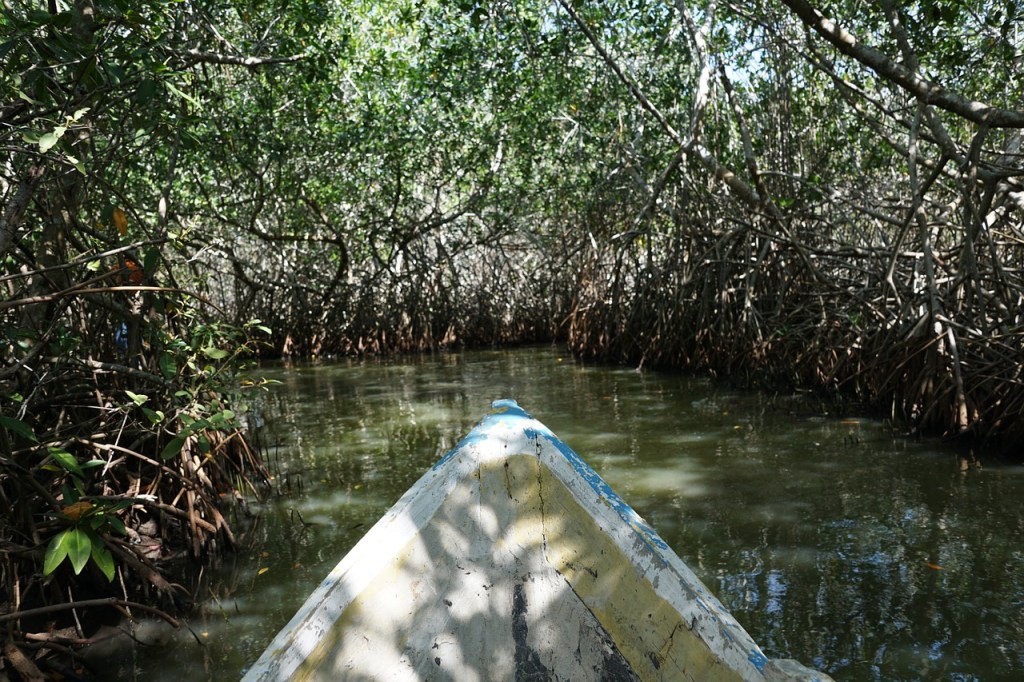
The subtle splash of his brittle paddle as it gently slapped the glass-like surface of North Arm Creek was all he could hear. Lining either side of the thinning tributary, thickets of grey mangroves strengthened the fragile banks. With every stroke, his weathered kayak was propelled further south as the dwindling creek’s neck tightened and grew ever shallower. Stopping to relax his tired arms, he rested the oar across his feeble legs, turning control of his vessel over to the ebb of the tide. He glanced down into the still jade water beside him, smiling as he saw the silhouettes of curious fingerlings making their ascent from the silty bottom. His hand rested gently on the tattered shoebox that sat on his lap.
“Stupid old fool,” he whispered to himself.
It would have never happened if he had not become complacent and cast his line so close to the bird in the first place. His foolishness, and his unweighted hook baited with a small fillet of pilchard, had already sealed the bird’s fate. The soft slap as it hit the water was enough to draw the bird’s attention and the glisten of sinking silver would prove too tempting. Thinking back, he saw the bird launch from its perch before diving into the water, though at that exact moment he’d thought nothing of it. Then he felt a strange weight on his line that resembled no fish he’d encountered before. He remembered the feeling of his heart sinking when he noticed the bird had not surfaced. Knowing the moments that followed would be crucial, he reeled slowly trying to be as careful as he possibly could. At one point, he even stopped, grasping the line with his hands and tugging gently in the hope the bird would pop free. They weren’t to be so lucky. He knew then that the only way to free the bird from his hook was to bring it in. Upon landing it, he took the bird in his hands and was surprised the barb came free so easily. At first, he thought perhaps their luck had turned, but with a second look, he could see the struggle had indeed left the bird vulnerable. He set it free immediately and watched as the bird tried, but gave up quickly. It squatted, huddled in one place looking back up at him fearfully. The bird could not fly. Left unattended the injury would have surely proven fatal.
His hand stroked the lid as he surveyed his surroundings. A lone ibis soared overhead. He watched it gliding through the air in a circular motion, descending with every turn before disappearing below the southern horizon. In the distance, a narrow shoal supported a pair of sooty oystercatchers who strolled leisurely, inquisitively probing the silt with their bills in their search for molluscs or worms. A sudden bursting breath of air interrupted the silence and a fine mist wet the back of his neck. He looked around to see two dolphins passing side by side. Each of their dorsal fins split the surface of the calm water before they twisted and turned, braiding themselves around one another and fading once more into the depths. Clutching his hands, he dipped them into the luring water scooping what he could to wet his face and arms. He breathed sharply.
“Things could be worse,” he directed his words toward the box.
For decades he’d lived here. Just like the bird he had migrated here, the only difference being the maritime industry had brought about his arrival, while the bird came and went seasonally as it wished. Early on, the threat of approaching southern storms had forced him here. His fishing crew and their vessel would often flee St. Vincent Gulf to lay low amongst the sheltered waters that the Port River system offered. Later, sailing on the ketch Falie had granted him the ability to continue navigating the waters he had grown to love while also allowing him to be home more often with his two young daughters. More recently, he had come to know the smaller and less accessible waterways of the region intimately. He’d now explored every branch of this inlet many times over and he was sure the bird on his lap had seen every nook and cranny too. But now his seafaring days were well behind him, and his daughters long moved on. Sadly, he knew this old kayak he’d salvaged from someone’s rubbish pile was all that offered him a taste of the freedom and connection he once knew. It was only his affection for nature and the draw of the water that kept him here and if anyone could relate, it was this bird in the box on his lap.
Opening the lid, he peered in. The bird sat still, looking up cautiously.
He’d spent the last few weeks rummaging through guides, doing all he could to care for it. He had sourced the appropriate feed and kept it restricted allowing it to rest. Never did he hand feed it; always he left its food amongst the soft dirt he had scattered on the floor of its temporary cage. He was strict on himself never to touch it, and when he did it was only to transport it between its cage and this shoebox. When he was certain the bird had healed enough, he’d left the cage door open allowing it to fly around his tiny, rented flat. He had observed it for hours upon hours, and then days on end until he was certain it had built up enough strength. Then, upon the first opportunity, he began attempts to release it, as he knew that with every day removed from the wild its chances of survival would diminish. Moving on is never easy, he thought to himself, but now it was time. A tear grew in his eye and his heart warmed to see the bird staring back at him.
“Don’t be a pushover,” he spurred himself on.
He lifted the lid of the shoebox right off and waited, not knowing what to expect. The bird looked up and around. Clear skies meant freedom and he knew they were unmistakable to a bird. But the bird sat still.
“Blue, it’s time,” he pleaded with the bird.
But still, Blue sat still.
This time would be different, he told himself, knowing he had come prepared. Gently, he placed the lid back on the box, picked up his paddle, and began moving toward the muddy banks. There, the branches of a grey mangrove offered a perch. Carefully, he grasped a snaggy branch to pull himself closer. While anchored in position, he removed a small round container from within his bag before popping the lid. He reached in grabbing hold of two sticky pieces of tentacle before dipping them in the salty water and laying them out in plain sight on the horizontal branch of the mangrove. Once he had readied himself, he lifted the lid on the shoe box once again. He tipped the box on an angle giving Blue no option but to hop onto the branch. Ensuring the bird safely found its footing, he watched for a brief moment as it immediately began poking the awaiting tentacles with its beak. This was his moment, he thought. Thrusting the oar against the trunk of the mangrove carefully, he pushed himself and his kayak away. It was done.
He sat for a moment, watching as Blue finished the feed. He chuckled adoringly as Blue turned to him and let loose an insistent call. He knew the bird was demanding more. Instinctively, he soothed it, whistling as they had done together countless times. Then the pair sat, watching each other as he drifted further away before taking his paddle and using it to turn his kayak northward.
He choked back tears.
“Best of luck, Blue,” he offered the parting words.
He would cherish their time together forever. But he dared not look back now. As he began to paddle away he immediately missed the bird, and his heart grew heavier and heavier. Despite paddling faster, with every stroke the sadness that consumed him seemed to weigh him further down in the water. Once at the ramp, he hurried to get moving, quickly fixing the kayak to his racks and taking off. He dared not look to the creek. As he drove he kept his eyes on the road and far from his mirrors. He was alone again. Tears streamed down his face and he wondered what Blue was doing. A bird could not forget the mangroves, he was sure, and he took some comfort knowing he’d put him back only metres from where they had met. But none of that seemed to matter. He couldn’t hold back. Drowning in loneliness he cried uncontrollably as he turned onto the cul-de-sac and into his driveway. There he sat for a while, with no need to leave the car. Inside, there was nothing for him.
The call of the bird played over in his mind as he remembered their time together.
“Silly old fool,” he belittled himself once more.
Get a hold of yourself, he thought scornfully. He looked in the mirror, grasping a handful of his shirt and using it to wipe his eyes. Blue’s calls still rang through his head, as if he was still there, right beside him. Finally, he forced himself from the car and began to walk up the drive and toward his front door.
Unexpectedly, he felt the hair on the back of his head flutter as something darted past him closely.
“It can’t be!” His heart pounded as he swung round.
Please subscribe to receive my latest free readings and my posts about nature & science straight to your email. 🌏👩🏽🔬😀
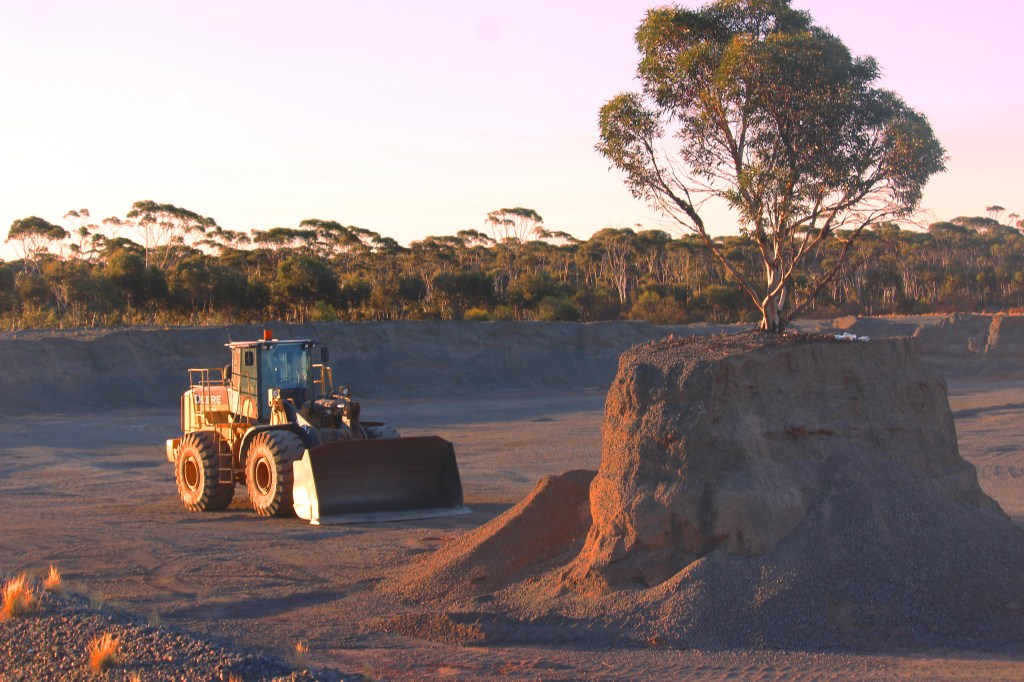
Conundrum? A digger-truck-driver has a decision to make in a gravel trap, Western Australia (W. A. Greenly).
Hey,
I’m W. A. Greenly,
Mechanic/Salesman turn science geek, Earth lover, and opinionated writer who now has a Bachelor’s Degree in Biodiversity and Conservation.
If you read my last blog, then you have already been briefly introduced to me. However, in this article, I intend to give you a much more in-depth story explaining why I am here, how I got here and what I’ll be covering in my future pieces.
First off, let me paint
a picture for you.
If I say to you, there’s a country
that boasts the world’s second-oldest national park, namely Royal National Park(1),
a country that has 3.3 million square kilometres (36%) of its oceans zoned as
marine parks(2), and this
country encompasses a range of contrasting yet beautiful terrestrial and marine
ecosystems that at one stage were bursting with an abundance of native wildlife…
Would you know what country this is?
Let me elaborate; this country also has tropical savannas, coastal floodplains, coral reefs, drier rainforests, and inland wetlands(3). It features Mediterranean ecosystems in the southwest, temperate eucalypt forests scattered throughout, plus salt marshes, mangroves(3) and 8,222 islands(4) each of which is host to its own unique ecosystem. Yet, this is only to skim the surface of its true ecological depth.
How about now, think you know it?
If you grew up here like me, I’d suspect you guessed the country I was referring to quicker than seagulls to an unguarded lunch.
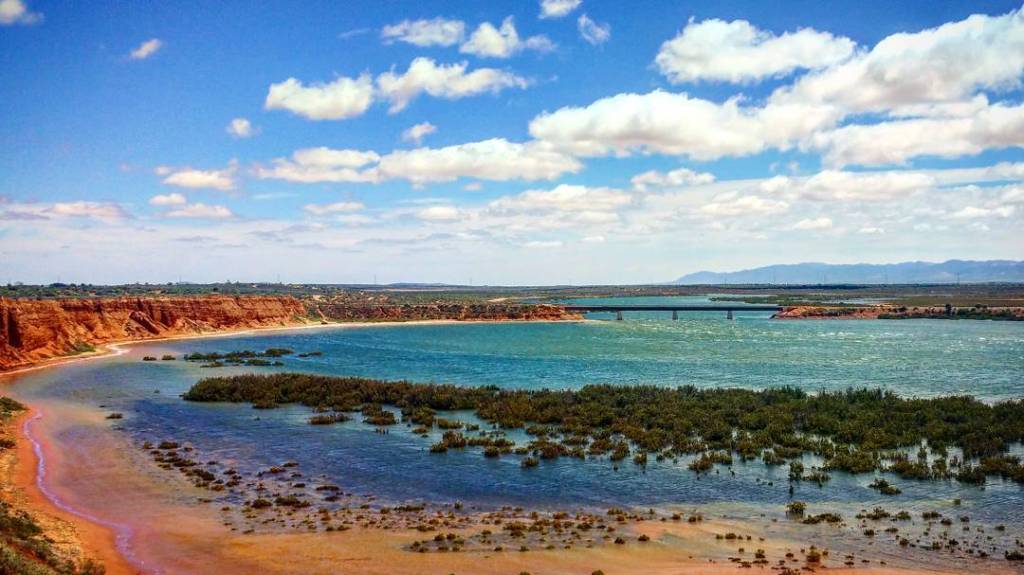
Matthew Flinders Red Cliff Lookout, Port Augusta, South Australia (W. A. Greenly).
Australian memories:
I grew up here, Australia. As a young boy, I vividly remember the streets lined with Eucalyptus, Callistemon, and other native trees, that when flowering delicately littered the asphalt with crumbling leaves, colourful filaments, and rock-hard gumnuts that were never pleasant to trod on in bare feet. Whispers of the legend himself Bob Hawke, the beer ‘skulling’ environmentalist prime minister who declared the 1990’s the “Decade of Landcare”. Watching and singing along to “Skippy the Bush Kangaroo” on the Nine Network before school and then admiring mighty Steve Irwin wrestling crocs and harassing snakes in the arvo while we ate tea.
It’s quite easy to reminisce about a time when life for me was carefree and “responsibility” was just a word that I heard grownups say. But what’s happening now?
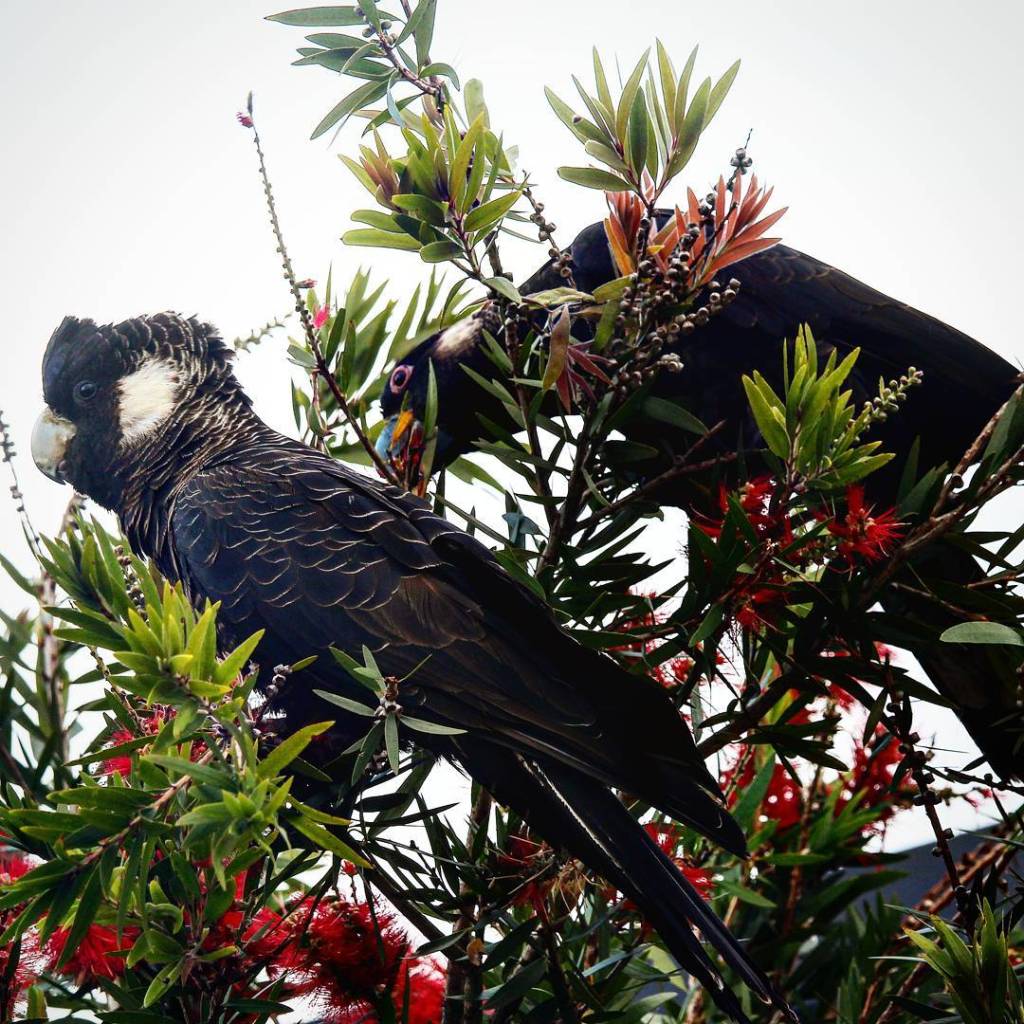
Two black cockatoos perched amongst Callistemon near Nornalup, Western Australia (W. A. Greenly).
The present:
Well, as you know mankind is facing one of the most gruelling challenges to have confronted us in the twenty-first century, climate change(5). The debate surrounding climate change in Australia is most certainly alive and well, as it should be in any country.
Various independent studies affirm
that the climate change currently occurring is anthropogenic, that is, caused
by humans, and over 97% of climate scientists agree on this(6;7;8;9;10).
Yet, currently, the primary energy consumption of Australia is still supplied by coal (around 40% as of 2019)(11) and despite the imminent threat of climate change, in the 2017-18 financial year Australia exported around 382 million tonnes of black coal. A figure that has been growing on average by 4% a year over the last decade(12).
Currently, 91 species of Australian flora and fauna are listed as extinct, plus 1 fish species Galaxias pedderensis is listed as extinct in the wild(13;14). While another 1790 species of Australian flora and fauna are listed as being either vulnerable, endangered, or critically endangered, with a further 8 fishes currently listed as conservation dependent(13;14).
According to the International Union for the Conservation of Nature (IUCN), the main drivers of biodiversity loss are:
Habitat destruction (on land and at sea).
Resource overexploitation.
Climate change.
Pollution.
And invasive species(15).
Australia is in no way a stranger to these driving issues;
land clearing rates in Queensland tripled in the years 2013-2014 when compared
to 2009-2010(16).
Invasive species and feral animals are continually exerting
more pressure on Australia’s biodiversity and the fragmenting and degradation
of habitats is ongoing(16).
Sadly, the overall outlook for Australia’s biodiversity is very poor(16).
Not to mention that as of October 3rd, 2019 the population of Australia exceeds 25.4 million, a figure that in 1995 was just 18.1 million(17). Now, an increase of 7.3 million may not seem like much in the grand scheme of things, but an increase of just over 40% within 24 years is quite a substantial jump. On a global scale, the world population is 7.6 billion(18) and is predicted to reach 11.2 billion by 2100(19), another worrying increase of well over 40%.
Yet, despite
the population growth history, the predictions, and the undeniable fact that
human population growth adds further pressure to all the drivers of
biodiversity loss, the pressures of local and broad-scale population growth are
barely heard amongst any climate change or biodiversity loss commentary.
So, we
have just touched on climate change, carbon emissions, coal exports, energy
production, species extinctions, the drivers of biodiversity loss, the poor
outlook for the future, and I’ve even slipped in some population growth figures
and predictions. But to be brutally honest, the above-mentioned issues and facts
aren’t even skimming the surface of the current environmental issues that face
the world or Australia.
Why do I care?
In some way, all those pressing issues continually drive me to seek answers and explore our natural world, but if it wasn’t for one special moment in time they may not have been on my radar at all.
Let me
explain.
As you likely already know, little over 12 months ago I was employed as a qualified Mechanic and Service Advisor spending my time in a dirty old workshop waiting for the next broken-down car to be towed in so I could try and make my next big sale. The closest I would get to the environment between 8 am to 6 pm every weekday was the all-too-familiar tree that was visible when I caught a glimpse of the outside world through the garage door of the workshop, or the dirt that would fall off the worn tyres of a customer’s sad sounding European import when removing the wheels to check the brakes.
If it wasn’t for my decision to take a month off work, stack the Hilux sky-high with camping and 4×4 gear, and head off from Adelaide across the Nullarbor to Perth, I may have never realised my true passions and how freedom and happiness truly felt.
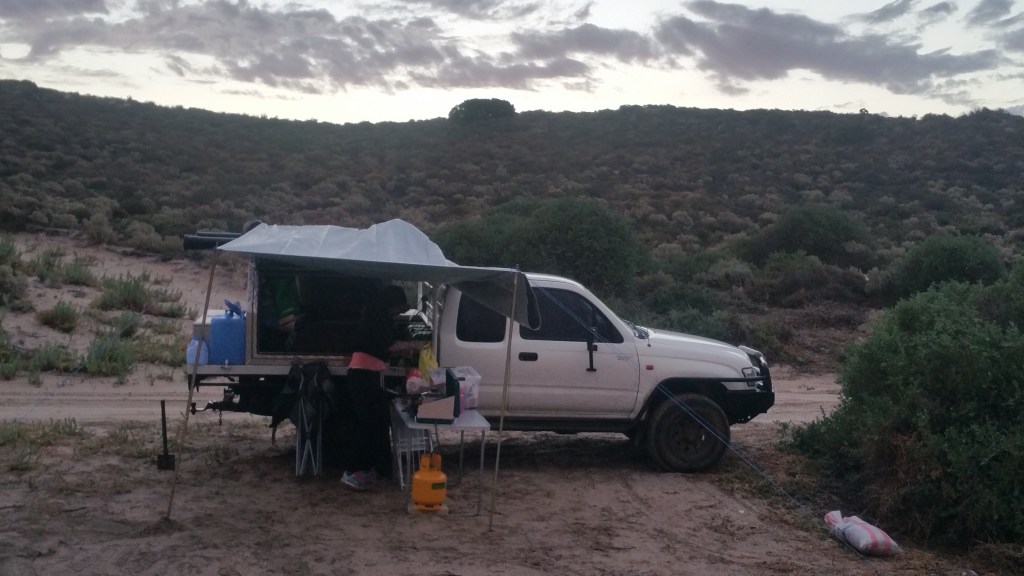
Shelter up just in time for the rain and dinner prep at Yalata Beach Campground, South Australia (W. A. Greenly).
This trip may not sound like much to some, but to me, it changed my life forever.
Overall the trip taught me that if you dare leave your comfort zone, life will reward you, and there’s certainly more to life than working a 9-5 and looking after only your own interests.
But 3 Key moments stick
in my mind that completely changed my mindset and opened my eyes.
The Iconic Nullarbor Roadhouse, Eyre Highway, Nullarbor, South Australia (W. A. Greenly).
Key moment 1: “Schooled by Snakes”.
Ok, so perhaps this is not really one key moment, more of 3 key moments involving snakes… but I’m going to group them all together.
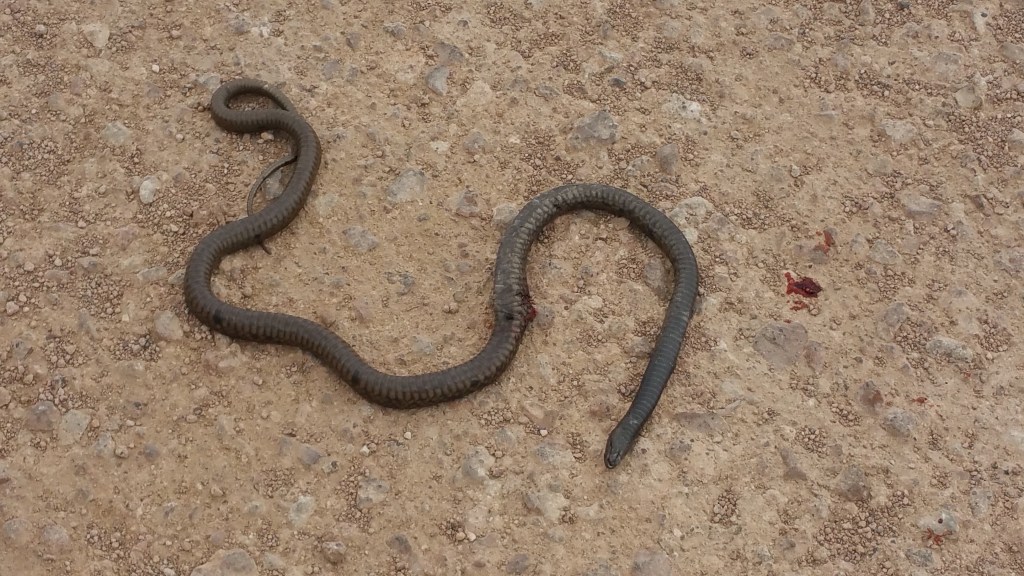
I’d never properly seen a snake in the wild, so when I took this trip across the Nullarbor, I was eager to spot one. My first sighting came only a few days into the trip, just one kilometre out of Fowlers Bay, South Australia. As I was travelling toward the town on a dirt road, I saw a thin black figure scoot out of the bushes and straight underneath my car. I was shocked, saddened, and absolutely devastated once I had confirmed it was my first snake sighting and I had accidentally run it over. I carried the burden for days. The death of this snake made a lasting impression on me and confirmed my love for animals of all kinds.
The unknown snake that sadly became roadkill near Fowlers Bay, South Australia (W. A. Greenly).
Luckily, that was not to
be my only experience with a snake.
One morning I headed off towards the Fitzgerald River National Park which is on the coastline just west of Hopetoun, Western Australia. I happened to look up at the sky above me and noticed a cloud had formed into a weird hook shape. Simultaneously, I noticed an almost identical hook-shaped piece of land appear on my GPS and it was very close by.
It seemed as if it was a
sign of some kind, so I pulled over and explored.
As I ventured toward the tip of this mini peninsula, I could see a small wooden bird-watching hut at the very end, only about 50 metres away. I don’t exactly know why, perhaps instinct, but something made me look down just as I stepped over a long, thick, brown snake that was curled up on the path and watching me with caution.
It just sat watching me,
slightly covered with some grasses for camouflage but for the most part
allowing its thick smooth and scaly body to bask in the sun and soak up some much-needed
energy.
Wow… a snake, an alive
snake, and what an odd situation that had led me to find it.
I was very happy to say the least, but at the same time, I was kind of scared. What if it decided it wanted to attack me? Australian snakes have an infamous reputation. I snapped a quick photo on my phone and continued along the path respecting the snake’s space.
Upon my return, the
snake had disappeared.
I learnt 2 things that
day:
If you get out there and amongst it, nature will reward you.
Snakes are not out to get you, they are just trying to survive and will, like most animals, avoid conflict if they can.
Bad phone photo of the scary snake watching me near Fitzgerald River National Park, Western Australia (W. A. Greenly).
I had another and perhaps more memorable experience with a snake on this trip whilst practicing my photography at Greens Pool and Elephant Rocks, Western Australia.
I was drawn towards 2
enormous, bulbous rocks that sat oddly in the middle of the beach. Eventually,
my curiosity overcame me, and I followed a thin trail of water from where it
met the ocean to its source up in between the 2 oddly placed rocks.
Suddenly I was startled,
my heart skipped a beat and I paused for a second not knowing what to do.
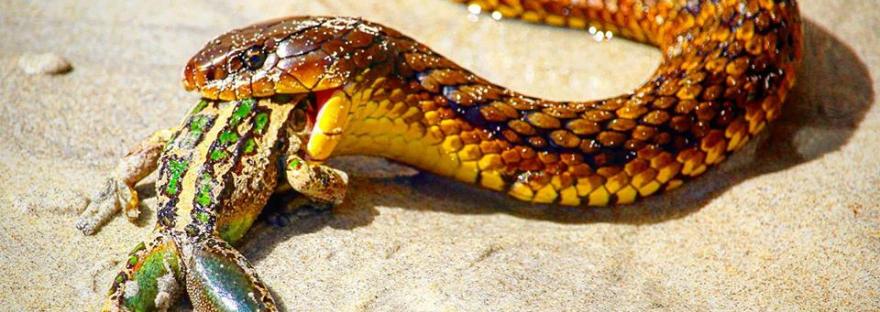
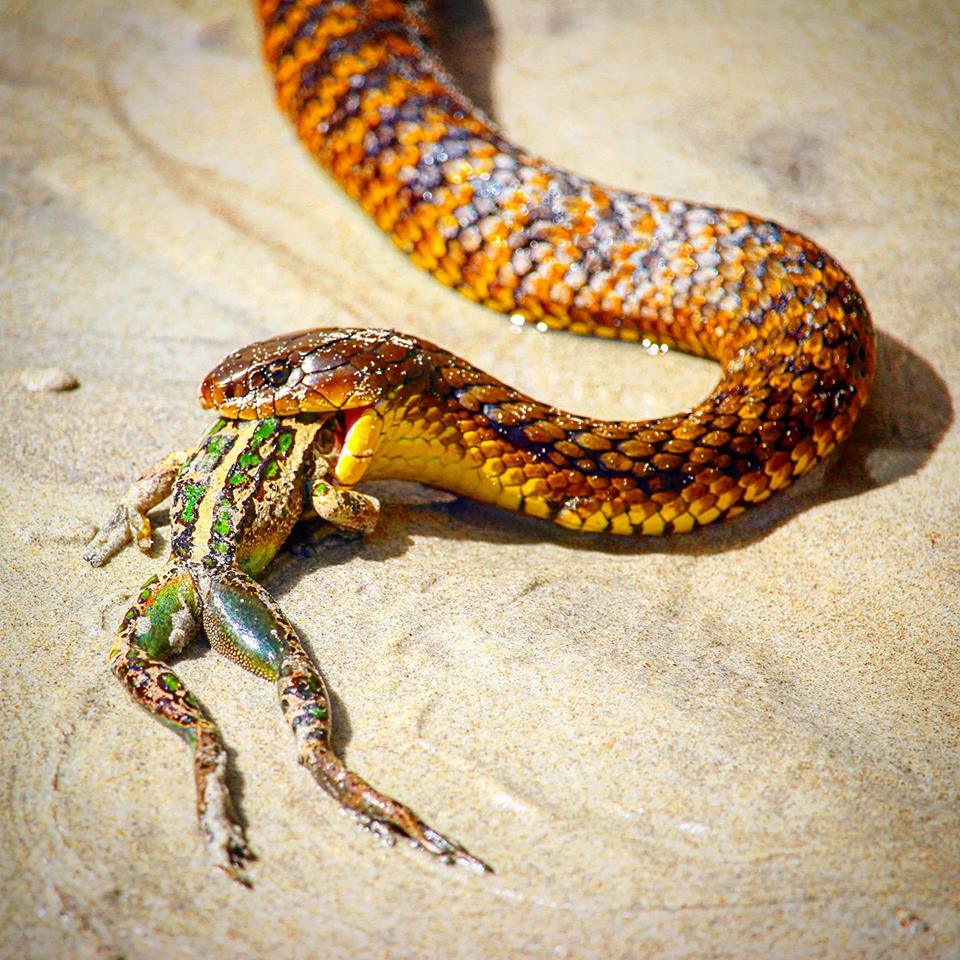
A beautiful tiger snake had also paused, possibly shocked, it too not knowing what to do. It stared at me, and I stared back at it, each awaiting the other’s move.
Slowly, the snake began creeping forward, reaching for something a few feet in front of it – a large green frog, semi-limp but still kicking slightly. The snake had obviously determined at this stage that the frog was too much of a prize to pass up and I was obviously not enough of a threat. So, it began again from where it had left off before I’d rudely interrupted its lunch.
I just watched this snake, mesmerised. It was like nothing I’d ever seen before. It had the most striking yellow and brown horizontal stripes running across its body. The colourful scales shimmered and glistened in the sunlight. Although now sadly passed, its meal too was beautifully coloured with bright greens and creamy yellows. But the snake’s eyes never left me and it watched me the whole time while slowly consuming its slippery meal.
I must have snapped about
100 photos before the snake had finished and eventually slipped away,
disappearing behind a boulder and into the bushes.
A complete adrenalin
shot, and all while I felt 100% safe.
That was it, the moment I fell in love with exploring nature.
Actual photo of the gorgeous tiger snake that took my breath away on the beach at Elephant Rocks, Western Australia (W. A. Greenly).
Key moment 2:1080 (ten – eighty) baiting.
As I travelled towards Beedelup National Park Western Australia, I noticed some signs along the road that reported “1080 baits used in this area” and “Be aware, 1080 baiting”.
I was somewhat aware of
1080 baiting which is why I chose not to take my dog Bruce, especially seeing
as this was my first real adventure so I didn’t know what to expect.
However, the signs don’t
tell you much, they are simply a warning to people with dogs or possibly
children that there is a risk they may come across a 1080 bait in these areas.
Fairly mundane and un-informative really.
That night I lay in my swag, mosquito net closed, peering out at the stars above which flickered beyond the swaying trees listening to the many birds calling to one another against the sound of the soft winds and the rustling of leaves, and I questioned… What exactly is 1080 baiting?
I admit, that night I
committed a cardinal sin when it comes to enjoying nature, I whipped out my
mobile phone and began to do some research.
I will not go into too much detail in this article, but I will say I was shocked to find out what these baits do, whom they target, and the inhumane way in which they kill. Not to mention the little amount of research that has gone into it from an ecological point of view.
The implementation and longevity of this baiting scheme taught me there are animals out there that need help, voiceless animals that are targeted by certain industries or individuals who ultimately are unnecessary victims of humanity, or inhumanity as it seemed.
At that moment, I realised there’s more to life than doing oil changes or trying to up-sell windscreen wipers to Joe Blow. There are innocent and forgotten animals and whole ecosystems that desperately needed assistance, the health of which we all ultimately rely upon.
Bruce, my dog, who sadly missed out on this road trip (W. A. Greenly).
Key moment 3: True Freedom.
Never have I felt the
freedom I felt after travelling alone, just me, the road, my hiking boots, and
nature. Once a few weeks had gone by, I had not a care in the world, no stress,
no idea of the time or date, no restrictions at all. I was completely free, and
the feeling was almost indescribable.
If I had to put it in a
few words I’d say; enriching, addictive, euphoric.
I was ultimately high on
life at those moments.
I think this feeling made me realise how and what life could truly be, rather than what it currently was.
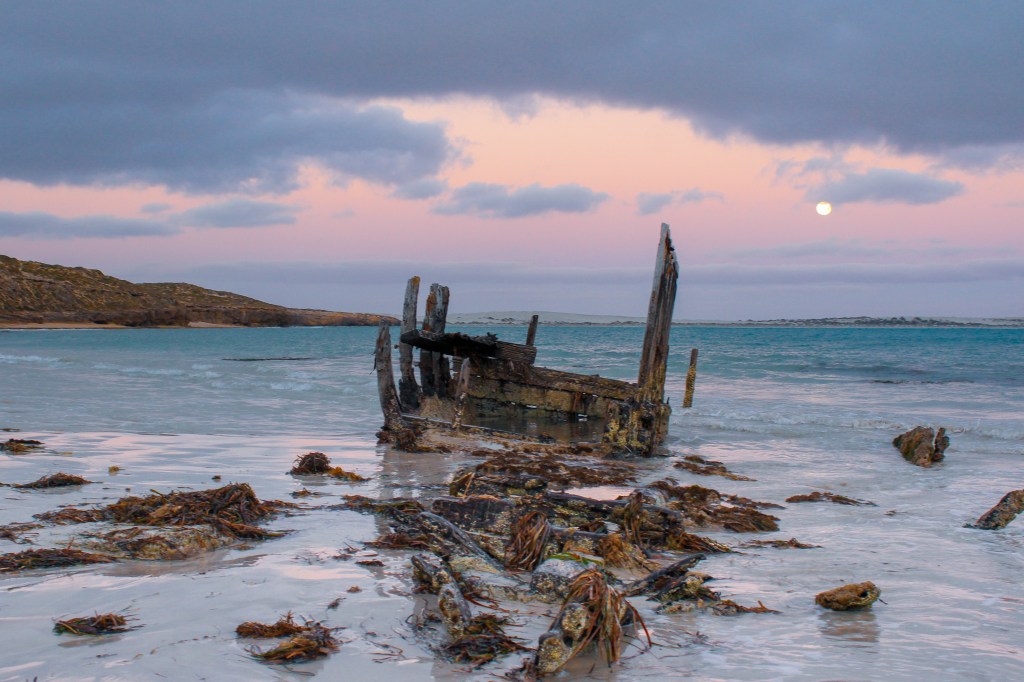
Cecelia’s wreck rests on the beach at Port Le Hunte, South Australia, as 2016’s super-moon is illuminated by the sun which sets behind me (W. A. Greenly).
Back to my false reality:
Sadly, that trip came to
an end, and I had to return to work… but it was not the last, and I have many
more to come.
At that time of my life, I was buried in debt, 28 years old with a mortgage, car loan, and all the usual bills. Trapped again, working a job I now knew was not where I wanted to be for the rest of my life.
So ultimately, I had a
decision to make. Follow the social norm and slave away at a job I most
certainly did not love to pay my debt down for the rest of my life?
Or, ditch it all, forget my overgrowing mountain of desires and promise to seek happiness, give back when possible, head to university to learn about my newly discovered passion, and start an afresh and brand-new journey?
No-brainer huh? Obviously, I chose the latter!
To the future:
This realisation and the discovery of my true passion led me to quit my job, put my house and car on the market, move home with my parents (thank you mum and dad), and totally alter all my goals and desires. Decisions that have resulted in a complete upheaval of my life and what is now a totally different direction and an exciting new adventure and lifestyle.
I studied biodiversity and conservation at Flinders university and volunteered when I could with conservation projects or in the palaeontology lab. I worked a casual job, and spent all my spare time (when not studying or working) researching and learning about our natural world or getting amongst it! Of course, I also wrote (another newly discovered passion). Articles, and creative pieces, and I began working on my first book.
I am proud to say, I have never felt better. There is a complete sense of happiness and joy that comes with exploring our natural world and trying to do positive things within it even if they have no apparent value to one’s self, or as is often the case, come at a cost.
But despite the cost, most importantly, I am happier than ever.
Still, there is much more to learn and write about the environment and our natural world, there are adventures to be had, many fields of exciting and cool science to explore, and of course, ongoing controversy to debate.
From what
I have shared, I hope to have sparked your interest, while providing you with a
sneak peek of my writing style, my passions, and what I intend to write about. However,
most of all, I hope you keep reading. Possibly one day, if not already, you may
find the beauty that is the natural world and fall in love with it, just as I
have.
If you
want more adventures, facts, controversies, opinions, even interviews with
academics or just creative pieces to read that all have scientific,
environmental, and earthly viewpoints drawn upon from my passion, I would love
you to subscribe to my blog and follow my Facebook or Instagram via the below
links.
Look out for my future
posts and articles and if you have any questions don’t hesitate to comment
below or on my Facebook feed and I’ll be sure to answer you straight away.
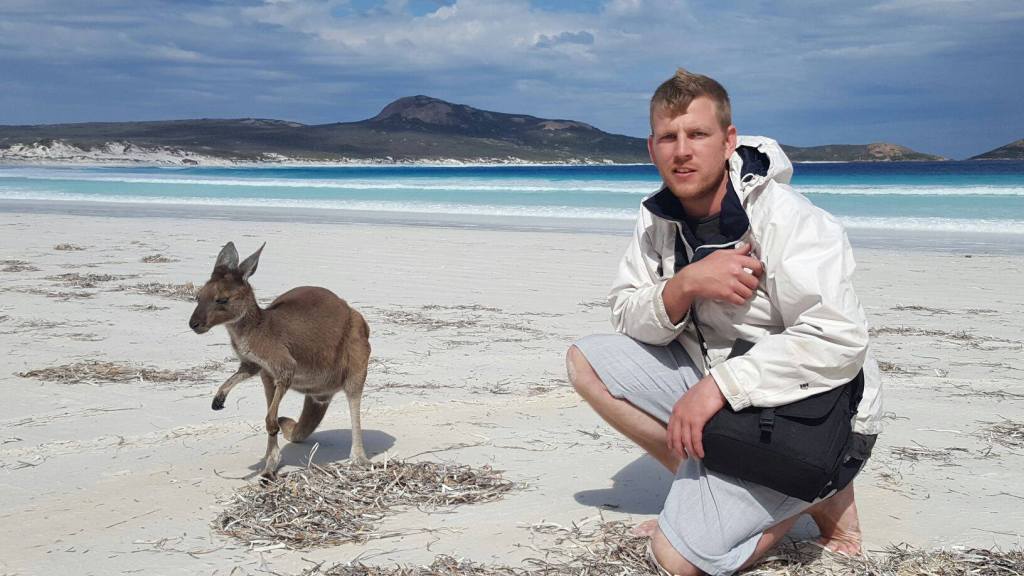
Me and a friendly kangaroo on the beach at Lucky Bay, Cape Le Grand National Park, Western Australia (W. A. Greenly).
Literature Cited:
Royal National Park. (2019). Royal National Park – Royal National Park. [online] Available at: https://www.royalnationalpark.com.au/ [Accessed 19 Sep. 2019].
Dessler, A.E. and Parson, E.A., 2019. The science and politics of global climate change: A guide to the debate. Cambridge University Press.
Oreskes, N., 2018. The scientific consensus on climate change: How do we know we’re not wrong?. In Climate Modelling (pp. 31-64). Palgrave Macmillan, Cham.
Oreskes, N. The scientific consensus on climate change. Science 306, 1686 (2004).
Anderegg, W. R., Prall, J. W., Harold, J. & Schneider, S. H. Expert credibility in climate change. Proc. Natl Acad. Sci. USA 107, 12107–12109 (2010).
Cook, J., Oreskes, N., Doran, P.T., Anderegg, W.R., Verheggen, B., Maibach, E.W., Carlton, J.S., Lewandowsky, S., Skuce, A.G., Green, S.A. and Nuccitelli, D., 2016. Consensus on consensus: a synthesis of consensus estimates on human-caused global warming. Environmental Research Letters, 11(4), p.048002.
Zhang, B., van der Linden, S., Mildenberger, M., Marlon, J.R., Howe, P.D. and Leiserowitz, A., 2018. Experimental effects of climate messages vary geographically. Nature Climate Change, 8(5), p.370.
Australian Government Geoscience Australia. (2019). Applying geoscience to Australia’s most important challenges. [online] Available at: https://www.ga.gov.au/scientific-topics/energy/basics [Accessed 3 Oct. 2019].


 W. A. Greenly.